


 |


| Quantity: | |
|---|---|
Aircraft Fuel Hydraulic Ring Control Pipe is a high-precision tubular component tailored for aviation hydraulic and fuel systems. It serves as a critical link in transporting fuel, oil, compressed air, and transmitting control signals in aircraft, especially in engine compartments. Manufactured by King-Mason, this pipe adheres to strict aviation and aerospace standards, integrating advanced CAD/CAM digital design and CNC manufacturing technologies. Its reliability and safety are paramount, meeting the rigorous requirements of aircraft conduit systems that demand exceptional performance under extreme conditions.
The pipe efficiently conveys fuel, hydraulic oil, and compressed air between key aircraft components. It ensures uninterrupted fluid flow to support engine operation, hydraulic control mechanisms, and other vital systems.
Beyond fluid transport, it houses control cables, enabling seamless transmission of operational signals across the aircraft’s hydraulic and fuel control networks. This maintains precise coordination between different system modules.
Designed to fit complex aircraft layouts, it integrates with surrounding components through optimized spatial routing. It minimizes interference while maximizing the efficiency of the overall conduit system.
Leveraging CAD/CAM digital technologies, the pipe is designed in CATIA, UG, and other professional CAD systems. CNC bending instructions are generated for automatic production, ensuring consistent shape and dimensional accuracy.
Crafted from high-quality materials including stainless steel (SS), carbon steel, alloy steel, aluminum, and titanium alloy. These materials offer excellent corrosion resistance, pressure resistance, and durability to withstand harsh aviation environments.
Shape and parameter accuracy are verified using specialized catheter measuring machines and tubular measuring software. This ensures every pipe meets design specifications, eliminating performance risks.
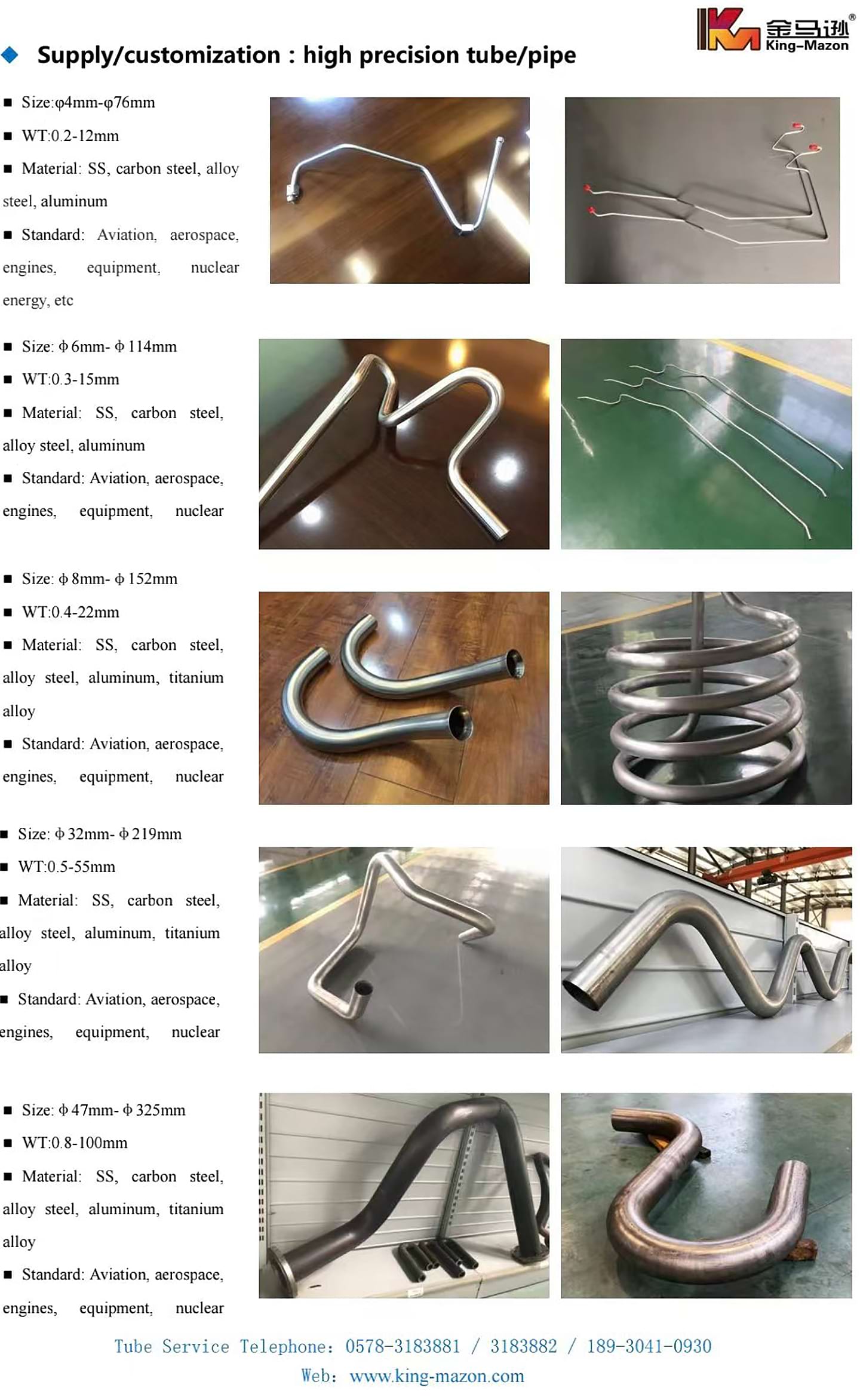
Composed of interconnected straight and arc segments, with arc transitions based on standard CNC bending machine radii. The vector pipe shape design (defined by X, Y, Z coordinates) enhances spatial adaptability.
Supports customization of size, wall thickness, and material to match specific aircraft models and system requirements. It caters to diverse aviation, aerospace, and engine applications.
Ideal for commercial airliners, military aircraft, and general aviation planes. It is installed in engine systems, fuel supply networks, and hydraulic control circuits.
Suitable for spacecraft, satellites, and launch vehicles. It meets the stringent reliability demands of space missions.
Used in aircraft engines, industrial gas turbines, and high-precision hydraulic equipment. It ensures stable fluid and signal transmission in critical machinery.
Applied in energy generation equipment and nuclear industry systems. It adheres to industry-specific safety and performance standards.
It meets strict aviation standards, features high-precision manufacturing, and uses durable materials. These attributes ensure reliability under extreme temperatures, pressure, and vibration conditions.
Yes, King-Mason offers customization of size, wall thickness, material, and structural design. It aligns with the unique requirements of different aircraft and systems.
Quality is ensured through digital design, automatic CNC manufacturing, and specialized measurement equipment. Every unit undergoes rigorous testing to confirm compliance with design parameters.


