


Views: 0 Author: Site Editor Publish Time: 2025-11-25 Origin: Site


Tube bending is a critical process in various industries, including aerospace, automotive, construction, and manufacturing, where precision and efficiency are essential. The rule of thumb for tube bending is a general guideline that helps simplify the bending process, ensuring consistent and reliable results. It is often used to determine the optimal bending radius for different types of tubes and materials. This rule generally suggests that the bending radius should be approximately 3 to 6 times the tube's diameter to avoid issues such as thinning, kinking, or cracking. By adhering to this basic principle, professionals can ensure the tube maintains its strength and integrity throughout the bending process. Understanding and applying this rule is crucial not only for maintaining quality but also for improving efficiency, reducing material waste, and minimizing errors in tube fabrication.
The rule of thumb for tube bending is a general guideline that simplifies the bending process by providing a basic standard for tube dimensions, ensuring efficiency and consistency in various bending applications. It helps operators quickly determine the best parameters for bending without the need for detailed calculations, making the process more straightforward and reducing the risk of errors.
The typical formula for tube bending, based on the rule of thumb, involves the bending radius being approximately 3 to 6 times the tube diameter. This range is considered ideal for ensuring that the tube maintains its structural integrity during the bending process. For example, if you are bending a tube with a diameter of 1 inch, the bending radius should typically fall between 3 inches to 6 inches for optimal results.
The rule of thumb is crucial in maintaining the integrity of the tube during bending. By following this guideline, you can avoid common issues like excessive thinning, kinking, or cracking, which can occur if the bending radius is too small. Proper bending radii help ensure that the tube doesn’t lose strength or become damaged, resulting in a more durable and reliable finished product. This is particularly important in industries like aerospace, automotive, and construction, where the quality of bent tubes is critical for safety and functionality.
The type of material being bent plays a significant role in the bending process. Different materials, such as steel, aluminum, and copper, have varying levels of malleability, strength, and resistance to deformation, which affects the bending radius and the amount of force required. For example, aluminum is more flexible and easier to bend compared to steel, which requires more force and a larger bending radius to avoid damage. Copper is relatively soft but can be prone to cracking if bent too sharply. Materials with higher tensile strength may require larger bending radii to avoid thinning or cracking. Understanding the material’s properties is crucial for selecting the correct bending radius and method.
The diameter and wall thickness of the tube are directly related to the required bending radius. Larger diameter tubes generally need a larger bending radius to maintain their structural integrity and avoid excessive deformation. Similarly, thicker-walled tubes require more bending force and may need a larger radius to prevent material failure during the bending process. As a general rule, for tubes with larger diameters or thicker walls, the bending radius should be increased to prevent issues such as kinking, collapsing, or thinning of the tube walls. These factors must be taken into account when applying the rule of thumb for tube bending.
The method used for bending—whether manual, hydraulic, or CNC—also influences how the rule of thumb is applied. Manual tube benders are typically used for smaller, simpler projects and are more limited in terms of control and precision. The bending radius for manual benders often follows the general guideline but may require adjustments based on the material and tube size. Hydraulic benders offer more control and power, allowing for bending larger or thicker tubes with higher precision. For CNC tube benders, the bending radius can be more precisely controlled using automated systems, which allows for tighter tolerances and more complex bends without risking damage to the tube. Each bending method can affect how the material reacts and how closely the bending radius adheres to the rule of thumb.
Selecting an incorrect bending radius is a common mistake. A radius that’s too tight can cause kinking or thinning, weakening the tube. Conversely, a radius that’s too wide leads to inefficient material use and bulky designs. To avoid this, follow the rule of thumb—bending radius should typically be 3 to 6 times the tube diameter, adjusted for material type and size.
Bending the wrong material can cause cracks or deformations. Harder materials, like steel, require more preparation to avoid cracking, while softer materials, like aluminum, can suffer from damage if the bending radius is inadequate. Understanding the material’s properties is key to selecting the right bending method and tool for the job.
Each bending machine has specific limits. Manual benders are less precise and not suitable for larger tubes, while hydraulic benders offer more control but have size and material limits. CNC benders provide precision but require proper setup. Always check the machine’s specifications to ensure it’s suitable for your tube’s size and material to avoid poor results and damage.
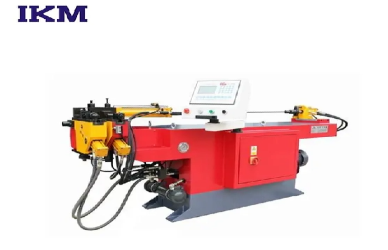
In the aerospace industry, the rule of thumb for tube bending plays a crucial role in ensuring the bending of pipes for aircraft systems that maintain both strength and precision. Aircraft components, such as fuel lines, hydraulic systems, and air ducts, require tubes to be bent with specific radii to prevent damage, such as cracking or weakening, which could compromise the integrity of the system. By following the guideline of 3 to 6 times the tube diameter for the bending radius, aerospace engineers ensure that the pipes fit within confined spaces without losing strength, which is vital for safety and performance.
In automotive manufacturing, the rule of thumb is applied when bending exhaust pipes, roll cages, and other critical components. A proper bending radius ensures that the exhaust system or structural components remain durable and free from weak spots. Too tight a radius can cause stress points, leading to cracks or failure under pressure. The rule of thumb helps automotive manufacturers achieve the correct bends, maintaining the integrity of exhaust systems and other essential parts, ensuring longevity and performance while preventing damage during use.
In construction, the rule of thumb for tube bending ensures the creation of stable structural tubing for buildings and infrastructure. Whether for scaffolding, handrails, or support beams, the bending of tubes must be precise to avoid compromising the strength of the structure. The guideline helps engineers determine the right bending radius for various tube sizes and materials, ensuring that the tubing can support the load it’s designed for without deforming or weakening. This application is crucial for maintaining the safety and durability of buildings, bridges, and other large-scale construction projects.
A radius that’s too tight can cause kinking or cracking due to material stretching beyond its capacity. If the tube shows visible deformations or becomes excessively thin, the radius is likely too tight. Compare the bend with the recommended radius (3 to 6 times the tube diameter) to check.
The rule of thumb applies to most materials, but adjustments may be needed. Softer materials like aluminum can handle tighter bends, while stronger metals like steel may need a larger radius. Always consider the material’s properties when applying the bending radius rule.
Yes, the guideline applies to both manual and CNC tube benders. CNC machines are more precise and may handle tighter radii, while manual benders might need a slightly larger radius due to less control.
Not following the recommended radius can cause kinking, cracking, or weakening of the tube, compromising its integrity. A radius that’s too wide may lead to inefficient design and affect the tube’s function or appearance.
Following the rule of thumb for tube bending is essential to ensure quality, efficiency, and safety in tube fabrication. By maintaining a proper bending radius—typically 3 to 6 times the tube diameter—you help avoid material damage such as kinking, cracking, and thinning, which can compromise the integrity of the tube. Understanding and applying this rule across various industries, from aerospace to automotive and construction, leads to improved production outcomes, ensuring parts fit precisely and perform reliably. Additionally, adhering to the correct bending radius minimizes material waste and rework, contributing to cost-effective and sustainable production processes.


