


Views: 0 Author: Site Editor Publish Time: 2025-11-24 Origin: Site


Tube benders are essential tools used to bend metal pipes and tubes accurately for various industries like aerospace, automotive, construction, and manufacturing. In aerospace, they shape pipes for aircraft systems, while in automotive, they’re used for exhaust systems and roll cages. In construction and shipbuilding, tube benders create structural frameworks and piping systems.
Choosing the right type of tube bender—manual, hydraulic, or CNC—depends on the project size, material, and precision required. Manual benders are suited for small jobs, hydraulic ones handle medium to heavy tasks, and CNC benders offer high precision for complex projects. Understanding these options ensures optimal efficiency, quality, and cost-effectiveness.
A tube bender is a specialized machine designed to bend metal tubes or pipes into specific shapes and angles without compromising the material’s integrity. This tool is essential in creating pipes that fit perfectly into complex systems across various industries.
The main function of a tube bender is to apply controlled pressure to metal tubes, ensuring they bend without kinks, cracks, or distortions. It allows precise adjustments in bending angles, radii, and tube dimensions, which is crucial for maintaining the strength and functionality of the tube in its final application.
Tube benders are integral to several industries that require precise tube bending for system integration. In aerospace, they are used to bend pipes for aircraft systems, where accuracy is vital for ensuring proper fit and performance in limited spaces. In automotive manufacturing, tube benders create exhaust systems, roll cages, and structural components that require high precision to meet safety and performance standards. Similarly, in construction and shipbuilding, tube benders help produce piping systems and frameworks that must fit perfectly within the overall structure, ensuring the durability and efficiency of the final product.
Description:
Manual tube benders are operated by hand, requiring physical effort from the user to bend the pipe or tube into the desired shape. These benders typically feature a simple mechanical setup with a lever or handle that allows the operator to apply force.
Best Use:
Manual tube benders are ideal for small-scale projects, DIY tasks, or situations where precision and automation are not critical. They are commonly used for bending pipes in home workshops, repair tasks, or low-volume production.
Advantages:
Cost-effective: These benders are generally more affordable than hydraulic or CNC models.
Simple design: The mechanical operation is straightforward, making them easy to use and maintain.
Portable: Manual benders are lightweight and easy to move, allowing for use in different locations.
Limitations:
Limited to smaller diameter pipes: These benders are not suitable for larger or thicker pipes.
Requires more effort: Bending thicker or more rigid materials can be physically demanding.
Less precision: Manual benders lack the accuracy and consistency of automated machines, which can be a drawback for intricate projects.
Description:
Hydraulic tube benders use hydraulic pressure to bend pipes, providing more force and control compared to manual benders. These systems are powered by a hydraulic pump that drives a ram to bend the tube.
Best Use:
Hydraulic tube benders are ideal for medium to large-scale applications where more power is needed to bend thicker or more rigid materials. They are commonly used in industries like automotive, construction, and manufacturing, where higher bending force is required.
Advantages:
Efficient: Hydraulic benders can handle larger diameters and thicker materials with ease.
Precise: They offer more control over the bending process, ensuring more accurate results than manual models.
Versatile: Can accommodate a wide range of pipe sizes and materials.
Limitations:
Requires a hydraulic power source: These machines need a power unit to operate, which can add complexity.
Bulky: Hydraulic benders tend to be larger and heavier than manual models, making them less portable.
More expensive: Due to their power and precision, hydraulic benders typically cost more than manual benders.
Description:
CNC (Computer Numerical Control) tube benders are fully automated systems that use computer programming to control the bending process with high precision. These machines are capable of executing complex bends automatically, with minimal human intervention.
Best Use:
CNC tube benders are ideal for large-scale production, particularly in industries like aerospace, automotive, and manufacturing, where high accuracy and repeatability are crucial. They are perfect for applications that require complex, intricate bends and high-volume production.
Advantages:
High precision: CNC benders provide exceptional accuracy and consistency, making them ideal for complex and critical applications.
Repeatability: Once programmed, CNC machines can perform the same bends with perfect consistency, improving production efficiency.
Adaptable: CNC benders can handle a wide range of materials, sizes, and bending angles, allowing for versatility in different industries.
Limitations:
High initial cost: CNC tube benders require significant investment upfront, making them less accessible for smaller operations.
Skilled operators required: Operators need to be trained in programming and maintaining CNC systems.
Expensive maintenance: These machines are complex and may require more costly upkeep compared to manual or hydraulic models.
When selecting a tube bender, key factors such as material type, pipe diameter, precision, production scale, and budget will determine the best choice for your application.
Material Type:
Manual benders suit softer materials (e.g., aluminum), while hydraulic and CNC benders handle tougher materials like steel and thicker pipes.
Pipe Diameter:
Manual benders are for smaller pipes, while hydraulic and CNC benders can handle larger and thicker tubes.
Required Precision:
CNC benders offer high precision, ideal for tight tolerances. Hydraulic benders are more precise than manual, but less so than CNC models.
Production Scale:
Manual benders work well for low-volume tasks. Hydraulic benders are best for medium-scale jobs, while CNC benders are ideal for high-volume, automated production.
Budget:
Manual benders are the most affordable, while hydraulic and CNC benders cost more due to their advanced capabilities.
Manual Tube Benders: Best for small-scale, low-precision tasks with smaller pipes and softer materials.
Hydraulic Tube Benders: Ideal for medium-scale projects with thicker pipes and moderate precision needs.
CNC Tube Benders: Perfect for large-scale, high-precision production, handling complex bends and high volumes.
Choose the right tube bender based on your material, size, precision, production needs, and budget to ensure optimal performance and efficiency.
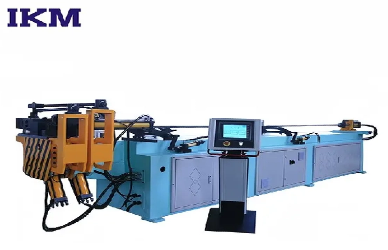
Tube benders play a crucial role in aerospace and automotive industries, where precision is essential. These industries require accurate bends for pipes and tubes that fit into tight spaces and complex configurations. In aerospace, tube benders are used to create pipes for aircraft systems, ensuring high performance in limited spaces. Similarly, in the automotive industry, tube benders are employed to fabricate components like exhaust systems, roll cages, and other parts that must meet strict safety and design standards.
In construction and shipbuilding, tube benders are indispensable for bending structural tubing and pipelines used in large projects. They ensure that pipes and tubes are bent efficiently and accurately to fit into frameworks and pipelines, contributing to the strength and stability of buildings, ships, and infrastructure. Tube benders help reduce material waste and improve workflow, ensuring that large projects are completed on time and with high-quality results.
For manufacturing industries, tube benders are essential for high-volume production. Automated tube benders, such as CNC models, allow manufacturers to bend large quantities of pipes with high precision and repeatability. This automation improves production efficiency, reduces labor costs, and ensures consistent quality across mass-produced parts. Tube benders are used in a wide range of manufacturing applications, from creating components for machinery to forming parts for consumer products.
Manual tube benders are operated by hand, suitable for small-scale tasks, and are affordable and portable but limited to smaller pipes and less precise bends. Hydraulic tube benders use hydraulic pressure, offering more force and precision, making them ideal for larger pipes and more demanding projects, though they are bulkier and costlier.
Yes, CNC tube benders can handle large-diameter pipes and a variety of materials like steel, aluminum, and stainless steel. They offer high precision and flexibility for both small and large pipes, though you need a bender with the right specifications for your needs.
For small-scale projects, a manual tube bender is the best choice. It’s cost-effective, easy to use, and portable, making it ideal for hobbyists or small workshops, though it’s less precise than hydraulic or CNC models.
Hydraulic tube benders need regular maintenance, including checking fluid levels and inspecting hoses for leaks. They are reliable with routine care, but maintenance costs can increase, especially if repairs to the hydraulic system are needed.
In conclusion, the three main types of tube benders—manual, hydraulic, and CNC—each offer unique benefits suited to different applications. Manual tube benders are ideal for small-scale projects or hobbyist use, offering cost-effectiveness and portability, though with limited precision. Hydraulic tube benders provide more power and precision, making them suitable for medium to large-scale tasks that require bending thicker or larger pipes. CNC tube benders, with their high precision and automation, are best for large-scale production and complex bends, especially in industries requiring repeatability and accuracy. Choosing the right tube bender is crucial to maximizing efficiency, ensuring precision, and optimizing cost-effectiveness for your specific needs. By carefully considering factors like project scale, material type, and budget, you can select the bender that best suits your requirements, helping you achieve optimal results in your tube bending operations.


