


Views: 0 Author: Site Editor Publish Time: 2026-05-07 Origin: Site


Choosing the right pipe bending machine is not only a technical decision but also a strategic one that directly affects production efficiency, product accuracy, and long-term cost performance. In industries such as aerospace, automotive, and precision engineering, a reliable bending process determines both quality and profitability. However, many buyers—especially those new to pipe fabrication—make costly mistakes during the purchasing process. At Zhejiang King-Mazon Intelligent Manufacturing Corp., Ltd. (King-Mazon), we’ve seen how these errors can lead to inefficiency, poor bending results, and unnecessary expenses. This article aims to guide you through the five most common mistakes to avoid when buying a pipe or tube bending machine and how to make a smarter, long-term investment in your production line using advanced equipment like King-Mazon’s full-electric CNC tube bending machines.
One of the most fundamental errors in selecting a bending machine is failing to clearly define the materials and pipe specifications you’ll be working with. Every metal behaves differently under bending stress—stainless steel, aluminum alloy, titanium alloy, and high-temperature alloy each require unique levels of pressure, speed, and precision. Without understanding these material behaviors, you risk selecting a machine that cannot consistently achieve the desired bending radius or angle without causing wrinkles, deformation, or cracks.
For instance, thin-walled stainless steel pipes may require a machine with precise mandrel and pressure die control, while thicker aluminum tubes may need higher torque capacity. King-Mazon’s fully-electric CNC bending machines are designed to handle such variations automatically. Models such as the KM-A50-CNC or KM-A100-CNC provide digital control over multiple axes, allowing accurate and repeatable bends for different metals. By defining your pipe dimensions—diameter, wall thickness, and material type—before purchasing, you ensure compatibility between your production needs and the machine’s bending capacity.
It’s also important to assess your typical production mix. Are you primarily working on small-diameter fuel lines or larger hydraulic tubing? King-Mazon offers ten standard models ranging from KM-A15-CNC to KM-A150-CNC to match different industrial scales. Understanding your specifications helps you avoid overpaying for unnecessary capacity or underestimating your machine’s workload limits.
Many buyers are tempted to purchase a machine with the highest possible bending capacity “just in case.” While this may seem like a safe long-term choice, it can often be wasteful. A high-capacity bending machine is not only more expensive but also heavier, slower in smaller-diameter operations, and consumes more energy. In most cases, your production will center around a specific range of pipe sizes, and choosing a model that fits your realistic workload is far more cost-efficient.
Think of capacity like horsepower in a car—you don’t need a race engine for city driving. Similarly, if your primary production involves 25–50 mm tubes, buying a machine capable of bending 150 mm pipes will lead to underutilization and unnecessary cost. King-Mazon’s KM-A25-CNC or KM-A38-CNC models are perfect for small and medium-sized manufacturing environments, providing precise control and fast cycle times without the overhead of oversized machinery.
In contrast, if you are in the aerospace or shipbuilding industry handling larger-diameter titanium alloy pipes, a higher model such as KM-A130-CNC or KM-A150-CNC will be more appropriate. Always match the machine’s capacity to the scope of your daily operation rather than extreme, infrequent projects. This ensures you maintain the best balance between flexibility, energy consumption, and operational cost.
Price is always an important consideration, but it should never be the deciding factor when investing in industrial equipment. A low-priced machine might seem appealing initially, yet it often sacrifices durability, precision, and advanced control systems—factors that are critical for long-term success. Pipe bending is a precision process; even a small deviation can result in product waste or assembly failure, especially in industries where dimensional accuracy is essential.
Buyers should evaluate what they are truly paying for. Key performance factors include control system sophistication, bending accuracy, repeatability, speed, and energy efficiency. King-Mazon’s full-electric CNC tube bending machines are built around intelligent servo-driven systems, which replace outdated hydraulic mechanisms. This not only ensures smoother, cleaner bends but also reduces noise, oil leakage, and maintenance needs. Each axis is controlled digitally, meaning the entire bending cycle—from feeding to rotation and clamping—is synchronized through CNC automation.
A low-cost alternative might rely on partial manual operation, increasing the chance of human error and inconsistent bend quality. Over time, the hidden cost of poor performance, frequent rework, and downtime can far outweigh the initial price difference. When you invest in a King-Mazon CNC bending machine, you invest in repeatable precision, stable production, and minimal maintenance—all of which pay dividends over years of operation.
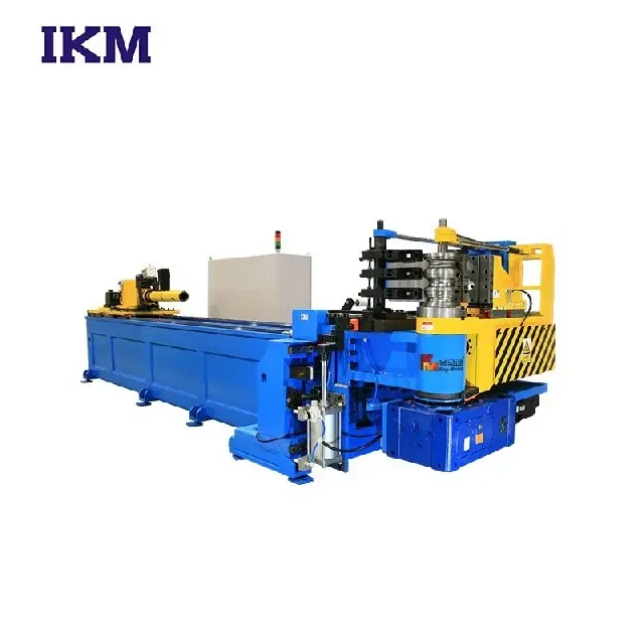
Even the most advanced machine is only as good as the support behind it. Another common mistake is focusing solely on the equipment purchase while ignoring long-term factors such as tooling cost, software updates, training, and availability of spare parts. Pipe bending relies heavily on specific mandrels, dies, and clamps—these tools wear out over time and need replacement or customization. If your supplier cannot provide quick and reliable spare parts, production downtime can become extremely costly.
King-Mazon addresses this challenge through its comprehensive after-sales service network. Each CNC pipe bending machine comes with professional installation guidance, operator training, and lifetime technical support. Spare parts and tooling are standardized across models, which makes it easier for customers to maintain consistent quality without long waiting times for custom parts. Moreover, because the machines are developed and produced in-house, King-Mazon can provide OEM-quality replacement tools and accessories tailored to your exact application.
Buyers should always ask: How easy is it to obtain replacement dies? How responsive is the supplier’s service team? Is software support available for future upgrades? By considering these factors early, you safeguard your investment and maintain productivity over the equipment’s entire life cycle.
Not all bending jobs are equal. Some require simple 90-degree bends, while others demand multi-bend configurations across different planes and radii. A generic or semi-automatic bending machine might suffice for basic jobs, but it will struggle with complex geometries that require precise control of multiple bending axes. This is where CNC technology becomes essential.
King-Mazon’s full-electric CNC tube bending machines are engineered for advanced multi-stack bending applications. Each model integrates intelligent motion control with 3D simulation, allowing operators to preprogram bend sequences, simulate collisions, and ensure accuracy before production. The machines are widely used in sectors such as aviation, aerospace, automotive, and precision instrument manufacturing—industries where even minor deviations can compromise system integrity.
A well-matched machine not only improves accuracy but also reduces setup time. With King-Mazon’s digital control interface, users can easily store and recall bending programs for different pipe types and projects. This makes it ideal for manufacturers handling diverse production runs or custom orders. Avoiding a generic model ensures that your investment serves your operational complexity rather than limiting it.
The good news is that each of these mistakes can be transformed into a proactive buying strategy. Before making a purchase, create a checklist that addresses the following questions:
Material Compatibility: What metals and wall thicknesses will you bend most often?
Capacity vs. Application: What is your realistic diameter range and production volume?
Performance Priority: Are you comparing features like servo accuracy, control software, and bend repeatability?
After-Sales Support: Does the manufacturer provide local service, quick tooling supply, and user training?
Application Fit: Does the machine handle complex multi-plane bending and future upgrades?
By using this checklist, you can filter through marketing claims and focus on the technical and operational details that truly matter. King-Mazon’s fully-electric CNC pipe bending solutions meet these practical requirements with precision, intelligence, and durability. Each model—from KM-A15-CNC to KM-A150-CNC—has been developed based on real manufacturing challenges, ensuring high bending quality and production stability.
The combination of digital control, servo drive systems, and user-friendly software makes King-Mazon’s machines suitable for diverse materials and bending needs. Whether your company produces hydraulic lines for heavy machinery or precision tubes for aircraft engines, our technology offers a reliable, repeatable, and efficient solution designed to minimize human error and maximize throughput.
Buying a pipe bending machine should never be a gamble. Every detail—from material type to control precision—determines how efficiently your business can operate. Avoiding these five common mistakes helps you choose a machine that not only fits your production requirements but also enhances long-term profitability. With King-Mazon’s full-electric CNC tube bending systems, you gain more than a machine—you gain advanced manufacturing capability backed by intelligent design, high precision, and dependable service.
If you are planning to upgrade your bending line or explore our CNC pipe bending equipment, contact us today to learn more about how King-Mazon can provide the right solution for your business. Our technical team is ready to support your production goals and help you achieve the efficiency and quality your projects demand.


