


Views: 0 Author: Site Editor Publish Time: 2026-05-17 Origin: Site


Selecting pipe fittings goes far beyond a simple hardware purchase. It stands as a critical engineering decision dictating your entire system's integrity, pressure limits, and future maintenance demands. When engineers mismatch a fitting type to specific fluid dynamics, the system suffers. These errors frequently trigger dangerous pressure drops, accelerate localized corrosion, and can even cause catastrophic line blowouts.
While dozens of geometric shapes exist—from standard elbows to intricate crosses—their foundational categories depend entirely on system integration. This comprehensive guide breaks down the three primary functional types of pipe fittings based on connection methods. We will explore the operational realities of Pipe Fitting Processing and how it impacts performance. Finally, you will receive a vendor-neutral decision framework to properly specify heavy-duty components for your next project.
Pipe fittings are fundamentally categorized by their connection methodology: Threaded, Welded/Soldered, and Mechanical/Compression.
Pipe fitting processing quality directly dictates pressure thresholds; instrumentation-grade processed fittings can withstand up to 12,000 psig, while standard industrial fittings operate at lower tolerances.
Geometric selection (e.g., 1.5D long-radius vs. 1D short-radius elbows) heavily impacts fluid dynamics and pressure drop.
Future-proofing requires balancing permanent structural connections (couplings) with accessible maintenance nodes (unions and flanges).
Industry standards classify pipe fittings by their primary joining methodology. The connection dictates pressure ratings, installation speed, and long-term maintenance requirements.
Threaded fittings utilize internal (female) or external (male) threads. They create reliable mechanical seals for low-to-medium pressure fluid conveyance. You will find them ideal for systems requiring future maintenance. They allow straightforward disassembly during routine inspections.
Installation requires strict adherence to standardized threading conventions. Common industrial standards include NPT (National Pipe Thread) and BSPT (British Standard Pipe Taper). These connections rely heavily on thread sealants. You must apply Teflon tape or specialized pipe dope. This ensures complete fluid-tightness under operational loads.
Despite their convenience, threaded connections carry distinct limitations. We strongly advise against using them in high-vibration environments. Severe thermal cycling also poses major risks. These extreme conditions frequently induce thread galling. They can also cause components to loosen over time, leading to hazardous leaks.
Thermal connections encompass socket-weld, butt-weld, and sweated joints. Technicians fuse these components using concentrated heat and specific filler metals. This approach creates a permanent, completely seamless bond.
Engineers evaluate welded fittings as the ultimate solution for demanding environments. They remain the standard choice for high-pressure lines. They also excel in hazardous chemical transport and high-temperature fluid systems. The absence of mechanical joints eliminates micro-leak pathways.
However, thermal processing introduces significant implementation risks. Labor costs remain inherently high. Installation requires specialized field welding expertise. Facilities must issue strict hot-work permits before installation begins. Furthermore, maintenance teams cannot simply unscrew these joints. Once installed, workers must physically cut the components to replace them.
Mechanical fittings rely entirely on applied physical force. Technicians tighten a nut over a ferrule to create compression seals. Push-to-connect variants utilize internal stainless steel teeth and O-ring grabs. Industrial pipelines often rely on tightening bolted flanges.
This category eliminates the need for open flames. You can safely deploy them in highly volatile environments. They serve as exceptional solutions for explosive gas lines or chemical refineries.
Mechanical joints offer unmatched scalability. Heavy-duty flanges provide high-strength scaling for massive industrial systems. Conversely, push-fit connectors offer rapid, tool-free deployment for low-pressure residential environments.
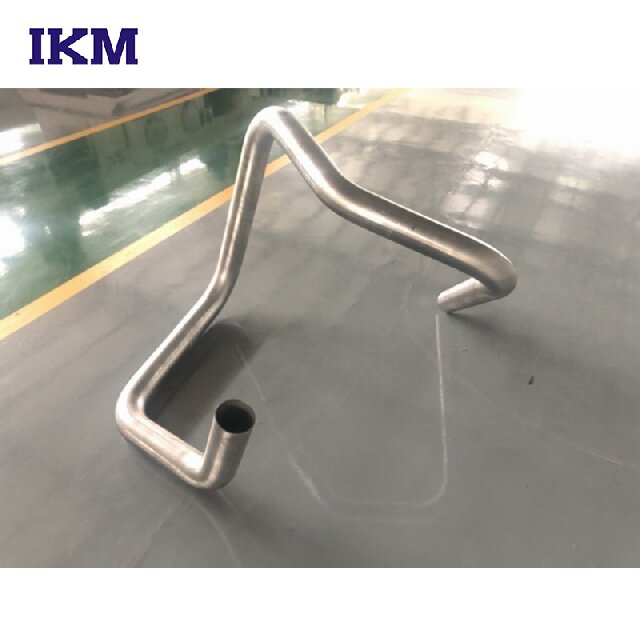
Geometric shape tells only half the story. The underlying manufacturing methodology dictates maximum pressure capabilities and safety margins.
The method of Pipe Fitting Processing fundamentally defines the component's maximum allowable working pressure (MAWP). Manufacturers typically choose between forging and casting processes.
Forged fittings undergo extreme compressive forces during manufacturing. This process aligns the metal's internal grain structure. It produces vastly superior strength for high-stress applications. Engineers routinely specify forged components for 3000# to 9000# pressure ratings. In contrast, cast fittings remain relatively brittle. They suit only low-pressure, non-critical fluid conveyance.
System designers must distinguish between standard industrial components and highly specialized instrumentation variants.
Industrial Fittings: Manufacturers build these for standard fluid conveyance. They handle moderate pressures. Tolerances remain generous to facilitate easy field assembly.
Instrumentation Fittings: Facilities process these components using severely restricted thread tolerances. They guarantee leak-tight seals under extreme duress. They easily handle operating temperatures plunging to -425°F or soaring to 1200°F. Their MAWP can reach an astonishing 12,000 psig.
Feature | Standard Industrial Grade | Instrumentation Grade |
|---|---|---|
Primary Application | General water, air, and low-pressure fluid conveyance | High-pressure gases, hazardous chemicals, extreme temperatures |
Manufacturing Tolerance | Standard commercial variance allowed | Severely restricted micro-tolerances |
Max Pressure (MAWP) | Up to 3,000 psig | Up to 12,000 psig |
Temperature Range | -20°F to 400°F | -425°F to 1,200°F |
Internal topography matters immensely for specific applications. Drain-Waste-Vent (DWV) systems rely entirely on gravitational pull. They lack internal pressure to force fluids through the pipes.
Fittings processed for DWV applications require ultra-smooth internal transitions. Manufacturers utilize swept geometries to prevent debris accumulation. Even microscopic rough patches can snag hair or solid waste. Standard pressurized lines do not require such meticulous internal polishing. Internal pressure easily pushes past minor surface imperfections.
Every directional change introduces turbulence. System designers must carefully balance flow efficiency against rigid spatial constraints.
Elbows forcefully redirect fluid paths. You must choose the correct curvature radius to maintain system efficiency.
1.5D vs 1D: Engineers calculate elbow curvature based on pipe diameter. Long-radius elbows feature a centerline radius equaling 1.5 times the pipe diameter (1.5D). This gradual curve significantly minimizes pressure drops. Short-radius elbows use a tighter 1D curve. You should only use short-radius variants when strict spatial constraints demand them. They introduce a severe tradeoff in flow efficiency.
Pigging Requirements: Many industrial pipelines require mechanical cleaning. Operators push a solid device called a "pig" through the line. Systems requiring pigging cannot use standard 90-degree elbows. The pig will jam. You must specify specialized 3D or 5D pipe bends. These elongated curves allow safe passage of the cleaning device.
Splitting flow paths requires careful component selection. Incorrect branching creates localized turbulence and structural stress.
Standard tees intersect at a sharp 90-degree angle. This abrupt turn creates significant hydraulic turbulence. Wyes (Y-fittings) provide a smoother alternative. They inject intersecting flow at a gentle 45-degree angle. This geometry drastically reduces hydraulic shock. Sanitary lines heavily rely on wyes to prevent dangerous sewer gas build-up.
Engineers must carefully evaluate the "Bull Head" tee. This scenario occurs when the branch (outlet) is geometrically larger than the run (main line). Fluid accelerates rapidly into the larger void. You must perform rigorous pressure-velocity calculations before installing a bull head configuration.
Piping systems frequently change diameter. They also require strategic disconnection points for future servicing.
Concentric reducers change pipe diameters uniformly like a symmetrical cone. However, they can trap air pockets in horizontal runs. Eccentric reducers solve this problem. They feature an asymmetrical shape. This design maintains a perfectly flat bottom-of-pipe (BOP) elevation. It remains crucial for preventing stagnant fluid pooling in horizontal lines.
When joining straight pipes, distinguish clearly between couplings and unions. Couplings serve as permanent structural extensions. If you need to break the line, you must cut the pipe. Unions solve this maintenance dilemma. They include an integrated threaded collar. You can independently disconnect a union to easily remove a failing valve or pump.
Using the correct geometric shape means nothing if the material fails. Chemical incompatibility and thermal stress destroy poorly specified systems rapidly.
Joining dissimilar metals triggers an immediate electrochemical reaction. If you connect raw copper pipe directly to galvanized steel, you create a crude battery. The less noble metal acts as an anode. It corrodes at an accelerated rate, leading to rapid system failure.
You must specify dielectric unions to solve this issue. These specialized fittings contain internal plastic or rubber sleeves. They completely break the conductive electrical path. This effectively halts the galvanic corrosion process.
Material specification strictly dictates operational boundaries. You cannot force standard materials beyond their certified limits.
Standard PVC plastics remain strictly limited to cold-water applications. If you introduce high thermal loads, the molecular structure fails. The plastic suffers rapid, irreversible structural deformation. It will warp, sag, and eventually burst.
High-pressure steam systems mandate highly specialized alloys. Corrosive chemical applications share similar requirements. You must specify industrial-grade 316 Stainless Steel. Furthermore, you must verify certified compliance with standard engineering codes. Ensure your forged components meet ASME B16.9 or ASME B16.11 specifications.
Navigating countless catalogs overwhelms many procurement teams. Follow this structured framework to narrow down your exact component requirements.
Start by evaluating the fluid dynamics. Does the system exceed standard commercial limits? Document your maximum pressure spikes and thermal peaks.
If your system handles extreme parameters, abandon cast components immediately. Move straight to high-rated, thermally processed forged fittings. Specify instrumentation-grade tolerances if handling volatile gases. Matching the MAWP to your peak system loads represents the first critical safety gate.
Pipelines rarely fail in straight runs. Failure clusters around active mechanical nodes. Map out your pumps, flow meters, and control valves.
You must specify unions or bolted flanges precisely at these vulnerable nodes. Do not weld permanent couplings near equipment requiring frequent calibration or replacement. Accessible maintenance nodes prevent costly downtime. They save technicians from cutting apart permanent infrastructure during late-night emergencies.
Finally, assess your actual installation environment and workforce. Do you possess a highly skilled labor force for onsite socket-weld or butt-weld procedures?
Many active facilities strictly prohibit open flames or sparks. If safety protocols prohibit hot work, you must pivot your strategy immediately. Abandon thermal processing. Switch your specifications to heavy-duty mechanical flanged systems or advanced compression processing. This ensures rapid, code-compliant field assembly without triggering facility safety alarms.
Selecting the right pipe fitting demands a calculated balance between fluid dynamics, pressure containment, and future maintenance accessibility. You cannot treat these components as interchangeable hardware. By clearly understanding connection methodologies, you establish a safe baseline for your fluid systems.
Always verify the underlying manufacturing tolerances. Instrumentation-grade components provide vital safety margins in extreme environments. Prioritize smooth internal geometries for gravity-fed drains, and select long-radius elbows to minimize pressure drops. Most importantly, build maintenance nodes into your initial design. Incorporating unions and flanges near critical equipment will dramatically reduce future servicing friction. Aligning connection methods and geometry with precise engineering codes remains the only proven path to a resilient, leak-free pipeline lifecycle.
A: Fittings passively route, branch, or change the diameter of fluid flow without movable internal parts. Valves actively control the fluid. They isolate flow using gates or balls, and they throttle fluid volume using globes or butterfly mechanisms.
A: Yes, for specific low-pressure applications. They rely on internal stainless steel gripping teeth and O-rings. However, they are generally avoided in high-pressure, commercial, or concealed industrial environments where mechanical or welded processing provides verifiable permanence.
A: "Schedule" refers to the wall thickness of the pipe and matching fitting. Higher schedules, such as Schedule 80 compared to Schedule 40, indicate substantially thicker walls. Manufacturers design higher schedules to withstand extreme pressure and accommodate harsher threading requirements.


