


Views: 0 Author: Site Editor Publish Time: 2025-09-16 Origin: Site


In the modern industrial landscape, the need to shape and manipulate metal pipes is fundamental across multiple sectors, from construction and automotive manufacturing to shipbuilding and furniture production. At the heart of these operations lies the pipe bending machine, a piece of equipment designed to bend pipes and tubes into desired angles and curves with precision and efficiency. For beginners entering industries that require pipe manipulation, understanding how pipe bending machines work, their types, and their applications is crucial for both safety and productivity.
This guide aims to provide a comprehensive overview of pipe bending machines, covering their functions, types, working principles, applications, and key considerations for beginners. By the end of this article, readers will have a solid understanding of the technology and its significance in modern industrial operations.
A pipe bending machine is a mechanical or hydraulic device used to bend metal pipes or tubes without causing deformation or damage to the material. The primary goal of a pipe bending machine is to alter the shape of a pipe in a controlled manner, creating smooth curves or precise angles according to the requirements of a project. Unlike manual methods, which can lead to irregular bends or kinks, pipe bending machines provide consistent results, enhance productivity, and reduce material wastage.
The machine typically consists of a bending die, a clamp or holding mechanism, and a power source that can be manual, hydraulic, or electric. By guiding the pipe around a die, the machine applies force to create the desired curvature while maintaining the structural integrity of the material.
Pipe bending machines play a vital role in numerous industries. In construction, they allow engineers to bend pipes for plumbing, HVAC systems, and structural frameworks. In the automotive and aerospace sectors, precision bends are required for exhaust systems, hydraulic lines, and fuel systems. Furniture manufacturers use pipe bending machines to create ergonomic designs and aesthetic shapes from metal tubing.
Using a pipe bending machine offers several key advantages. Firstly, it provides accuracy and consistency, ensuring that each bend matches the design specifications. Secondly, it improves productivity, as machines can bend pipes faster than manual methods. Thirdly, it reduces material waste, since precise bending minimizes the risk of errors that require scrap. Finally, it enhances safety, as machines reduce the physical strain on workers and the risk of injuries associated with manual bending techniques.
Pipe bending machines come in a variety of types, each suitable for different applications and materials. Understanding these types is essential for beginners.
Manual pipe benders rely entirely on human effort. These machines are typically smaller, portable, and suitable for workshops or smaller-scale operations. Manual benders often use levers, rollers, or dies to shape the pipe. While they are limited in capacity and may not provide the same precision as powered machines, they are cost-effective and practical for beginners learning the basics of pipe bending.
Hydraulic pipe bending machines use hydraulic pressure to apply force to the pipe, allowing for smoother and more precise bends. These machines can handle larger diameters and thicker materials than manual benders, making them ideal for industrial applications. Hydraulic machines often come with adjustable settings that allow operators to control the bending angle and speed accurately.
Electric pipe bending machines are powered by motors and provide high efficiency for frequent and repetitive bending tasks. Electric machines often feature CNC (computer numerical control) systems, enabling automated and precise bends based on programmed designs. These machines are commonly used in automotive manufacturing, furniture production, and industries where consistent quality is critical.
Rotary draw benders are a popular choice for achieving tight, precise bends without wrinkling or collapsing the pipe. The pipe is clamped into a bending die and drawn around it while maintaining its shape. This method is particularly effective for materials that are prone to deformation, such as stainless steel or aluminum tubing.
Roll benders use a set of rollers to gradually shape the pipe into a curve or circular arc. This type of machine is ideal for creating large-radius bends, such as those used in handrails, architectural elements, or circular frames. Roll bending is slower than rotary draw bending but can handle larger diameters and thicker materials.
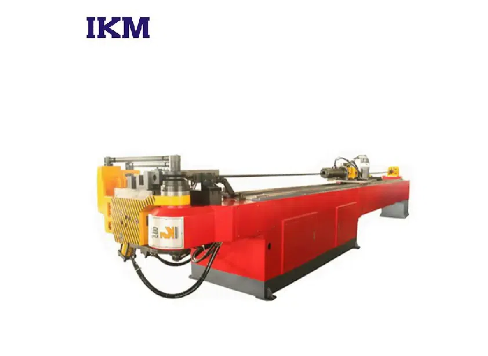
While the operation varies slightly depending on the type of machine, the basic working principle remains consistent. A pipe is first secured in a clamping mechanism or die to prevent slipping. The machine then applies force at a specific point or along a curved path, bending the pipe around a die or set of rollers.
In manual machines, this force comes from human effort, while in hydraulic or electric machines, it is generated mechanically or via fluid pressure. Advanced CNC machines use programmed instructions to control the angle, rotation, and speed of the bend, ensuring precise and repeatable results. Some machines also incorporate back-pressure dies, mandrels, or support rollers to prevent wrinkling or deformation during bending.
Pipe bending machines are versatile and can handle a variety of materials, including mild steel, stainless steel, aluminum, copper, and brass. The choice of machine and die depends on the material’s thickness, strength, and ductility. For example, stainless steel requires more force and precise dies to prevent cracking, while aluminum can be bent more easily but may require additional support to avoid distortion.
The applications of pipe bending machines are extensive. In construction, they are used for plumbing, electrical conduit installation, and creating structural supports. In automotive manufacturing, these machines bend exhaust pipes, hydraulic lines, and chassis components. Aerospace industries use precision bending to shape fuel lines and hydraulic tubing. Furniture manufacturers rely on bent tubes for chairs, tables, and decorative frames. Even in shipbuilding, bent pipes are essential for hydraulic systems, ventilation ducts, and handrails.
Pipe bending machines also find applications in industrial equipment manufacturing, HVAC systems, oil and gas pipelines, and renewable energy installations, such as solar and wind systems. The versatility of these machines makes them a cornerstone of modern industrial production.
For beginners, selecting the right pipe bending machine requires consideration of several key factors. First, the material and diameter of the pipes you will be bending determine the type and power of the machine. Thicker or harder metals may require hydraulic or CNC electric machines.
Second, consider the bending radius and angles needed for your projects. Machines that can achieve tighter radii or more precise angles may be necessary for complex designs. Third, think about production volume. Manual machines are suitable for occasional use, while high-volume operations benefit from automated or electric machines.
Other factors include the workspace size, budget, operator skill level, and the need for portable or fixed installations. Safety features, ease of maintenance, and availability of replacement parts should also influence your decision.
Proper maintenance and safe operation are crucial for maximizing the lifespan of a pipe bending machine. Beginners should ensure that the machine is lubricated regularly, the dies and rollers are clean and free from damage, and hydraulic fluids are checked for proper levels. Worn or damaged parts should be replaced immediately to prevent accidents or substandard bending results.
Safety precautions include wearing protective equipment, securing pipes firmly, avoiding overloading the machine, and following the manufacturer’s operating guidelines. Training for operators is essential, especially when using hydraulic or CNC electric machines, to prevent injuries and maintain precision.
Using a pipe bending machine provides multiple advantages. It ensures precision, reduces material wastage, enhances safety, and improves productivity. The ability to achieve consistent bends without deforming the material also increases the overall quality of the final product. For workshops and industrial operations, investing in a high-quality machine can save time and money while providing flexibility to handle a wide range of tasks.
Pipe bending machines continue to evolve with technological advancements. CNC-controlled machines are becoming more widespread, offering higher accuracy and the ability to store multiple bending programs. Automation is reducing manual labor, increasing throughput, and allowing complex bends that were previously difficult or impossible to achieve. Additionally, the development of lightweight, corrosion-resistant materials and advanced die designs is expanding the capabilities of pipe bending machines in new industrial applications.
For beginners entering industries that require pipe manipulation, understanding pipe bending machines is essential. From simple manual benders to advanced CNC hydraulic machines, these devices provide the precision, efficiency, and safety needed to shape pipes for a wide range of applications. Proper selection, maintenance, and operation ensure consistent results, reduced material waste, and enhanced workplace safety.
By investing in the right pipe bending machine and learning its proper use, workshops and construction sites can achieve higher productivity, improved quality, and long-term cost savings. Whether you are creating plumbing systems, automotive components, furniture, or industrial piping, a well-chosen pipe bending machine is a key tool for success.


