


Views: 0 Author: Site Editor Publish Time: 2026-09-22 Origin: Site


Springback goes beyond simple physics; it acts as a severe business bottleneck in modern manufacturing. Unpredictable elastic recovery drives up scrap rates, ruins quality control workflows, and significantly extends cycle times. While all metals retain some degree of elastic memory, modern production floors can no longer rely on outdated trial-and-error adjustments. Manual compensation wastes valuable time and expensive material, whereas today's competitive landscape demands predictable, repeatable results. Mastering springback means understanding its core material causes and evaluating how modern equipment handles this physical challenge. Investing in a high-quality CNC Tube Bending Machine automates this compensation seamlessly, turning a frustrating variable into a controlled data point. In this guide, you will discover exactly why springback happens, how different variables affect it, and how advanced machinery effectively mitigates these manufacturing risks.
The Root Cause: Springback naturally occurs due to the elastic recovery of metal following plastic deformation during the bend cycle.
Material Variability: Inconsistent alloys, varying wall thickness, and fluctuating yield strength are the primary drivers of unpredictable springback (and occasionally "springforward").
Technology Mitigates Physics: While you cannot completely eliminate springback, you can predict and compensate for it. Transitioning from manual adjustments to software-driven compensation is essential for maximizing ROI.
Equipment Selection Matters: Choosing between a CNC hydraulic pipe bender and a full electric CNC tube bender directly impacts your facility's capability to automate springback compensation and maintain tight tolerances.
You cannot effectively control springback without first understanding its mechanical roots. When a machine bends a metal tube, complex forces act upon the material. The outer radius stretches under tension, while the inner radius compresses. This process causes plastic deformation, which permanently alters the tube's shape. However, not all applied forces dissipate after the bend.
Metals inherently possess a tendency to return to their original straight state. As the bend die releases the tube, residual elastic stresses remain trapped inside the material wall. These internal stresses pull the tube slightly open. This elastic recovery is precisely what we define as springback. For example, if you program a perfect 90-degree bend, the tube might relax to an 88-degree angle upon release. The severity of this opening depends entirely on the metal's unique elastic memory and yield strength.
While most operators expect tubes to open up after a bend, sometimes they do the exact opposite. We call this "springforward" or negative springback, where the tube actually over-bends upon release. This baffling phenomenon usually stems from incorrect tooling setups, such as excessive axial tension or extreme drag from a tight wiper die. Specific material anomalies within the metal grain structure can also trigger springforward. It highly frustrates operators because it seemingly defies standard compensation logic.
A mere 1-2 degree angular variance sounds minor, but in modern manufacturing, it often proves catastrophic. Small angular deviations compound and cascade down the entire length of the tube. By the end of a long exhaust pipe, a 1-degree error translates into a massive gap, causing severe alignment failures in secondary operations. Consequently, robotic welding cells shut down, and assembly teams struggle to fit mismatched parts together. Ultimately, you lose revenue on scrapped materials, wasted labor, and missed production deadlines.
Operators and manufacturing engineers must actively control multiple practical variables. You cannot solely blame the machine for every failed bend; often, the raw material itself introduces chaos into the process. Here are the four critical factors driving tolerance drift.
Material Properties & Alloy Consistency: Raw material is rarely perfectly uniform. Variations in yield strength and tensile strength occur frequently, even within the same batch of tubing from a single supplier. Higher yield strength generally equals greater elastic memory. Consequently, you might run fifty perfect parts in the morning, only to find that a new bundle of tubes in the afternoon exhibits completely different springback behaviors.
Centerline Radius (CLR) vs. Wall Thickness: Tube geometry heavily dictates bending behavior. The relationship between your bend radius and the tube wall thickness matters immensely. Larger bend radii relative to thin wall thicknesses produce higher springback, as the material stretches more gently over a wider arc and retains more elastic energy. Conversely, tight bends on thick walls force aggressive plastic deformation, usually resulting in less dramatic springback.
Tooling Setup and Wear: Your tooling stack directly controls material flow. The wiper die, mandrel, and pressure die all play vital roles by applying necessary friction and pressure. Worn tooling significantly exacerbates tolerance drift. A degraded wiper die fails to support the inner radius properly, while a poorly lubricated mandrel increases drag. These mechanical inconsistencies often mask themselves as unpredictable material springback.
Machine Rigidity: Frame flex is a hidden enemy in tube bending. Older equipment often struggles with rigidity when bending tough alloys, causing the frame itself to bend slightly. When mechanical deflection occurs, operators frequently misdiagnose this flex as material springback. A rigid, well-built machine ensures the bending force transfers entirely to the tube, rather than the frame.
Common Springback Variables and Their General Effects
Variable Factor | Condition Change | Expected Impact on Springback |
|---|---|---|
Material Yield Strength | Increases (Harder material) | Springback increases significantly. |
Centerline Radius (CLR) | Increases (Wider bend) | Springback increases. |
Wall Thickness | Increases (Thicker tube) | Springback generally decreases. |
Tooling Drag / Tension | Increases (Excessive friction) | Can cause unpredictable springforward. |
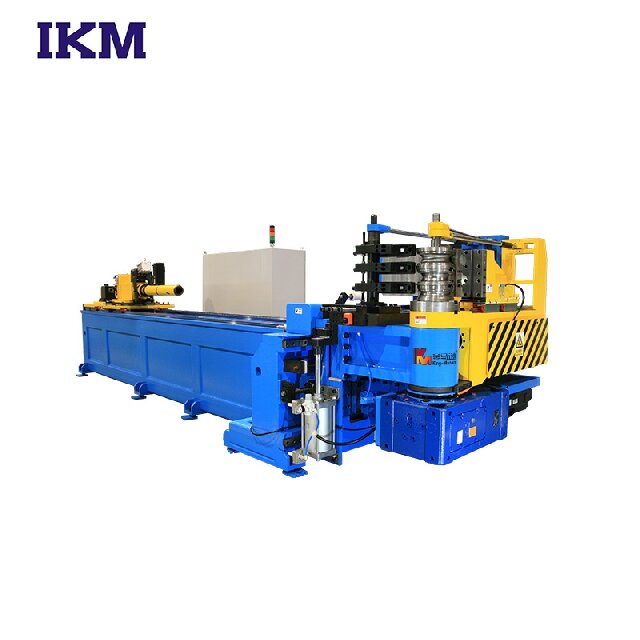
Choosing the right machine architecture sits at the core of your manufacturing success. Different bending machines correct springback using very different methods, making it essential to match the equipment to your specific production demands.
Heavy industries rely heavily on fluid power. A CNC hydraulic pipe bender excels here. It is best suited for heavy-wall pipes, structural applications, and high-force requirements. These robust machines deliver massive bending torque. However, they carry inherent limitations regarding micro-adjustments.
Hydraulic systems rely on analog valves and pressurized fluid. As the machine runs throughout a shift, the hydraulic oil heats up, altering fluid viscosity. These thermal fluctuations introduce analog valve delays. Making exact, repeatable one-tenth-of-a-degree adjustments for springback becomes difficult over a long production run, requiring the operator to constantly monitor and tweak the compensation angles.
Modern precision manufacturing demands electric control. A full electric CNC tube bender represents the gold standard for accuracy. It is highly recommended for aerospace, automotive, and thin-wall applications requiring stringent repeatability. Instead of hydraulic fluid, these advanced machines utilize precise servo motors.
The advantage is immediate and clear. Servo-driven axes provide instant, exact torque feedback, offering flawless positional accuracy with zero mechanical lag. When the software calculates a 1.5-degree over-bend to compensate for springback, the servos execute it perfectly every single time. Furthermore, temperature changes do not affect them, ensuring that the first part of the day matches the thousandth part exactly.
Complex geometries naturally introduce cumulative stress. Standard bending machines struggle with long tubes that require multiple opposing bends. Bidirectional CNC tube bending solves this challenge effectively. These advanced machines feature rotating bending heads capable of bending left and right in a single continuous cycle.
This bidirectional capability significantly minimizes part handling. The operator never needs to drop the tube to flip it around. Leaving the tube clamped continuously reduces gravity sag and limits cumulative stress accumulation. Keeping the material stable helps immensely in predicting springback on complex, multi-radius geometries, allowing the machine to maintain strict control over the entire workpiece from start to finish.
Machine Architecture Comparison Chart
Machine Type | Primary Power Source | Best Applications | Springback Compensation Strength |
|---|---|---|---|
Hydraulic | Pressurized Oil / Valves | Structural, heavy-wall pipes | Good for brute force, but susceptible to thermal drift. |
Full Electric | Servo Motors | Aerospace, automotive, thin-wall | Exceptional. Instant feedback, no thermal variance. |
Bidirectional | Electric / Hybrid | Complex, multi-bend tubular frames | Reduces handling stress, stabilizing overall tolerances. |
Modern manufacturing is rapidly moving away from manual guesswork. You cannot afford to have operators spending hours test-bending parts. Cutting-edge software now transforms springback from a complex mystery into a simple, automated math equation.
The days of manually guessing the correct over-bend angle are gone. Modern CNC controls utilize extensive historical material data libraries. The operator simply inputs the target angle, and the software automatically calculates and executes the exact degree of over-bend required based on data from past jobs. For instance, if a specific stainless steel typically requires a 2.3-degree over-bend at a given radius, the machine applies it automatically, saving time and drastically reducing setup scrap.
The best machines do not just guess; they verify. Advanced bending setups feature in-process measurement systems using laser scanners or tactile probes. After the machine executes the initial bend, it holds the tube while the sensor measures the actual angle post-bend. This data feeds directly back to the controller. If the springback is worse than expected, the machine automatically re-strikes the tube. This closed-loop feedback guarantees the final angle hits the exact tolerance before unclamping.
The future of tube bending involves AI. Artificial Neural Networks (ANNs) represent an emerging industry trend where predictive algorithms analyze thousands of previous bend cycles, evaluating material batches, temperatures, and tooling wear. The neural network optimizes springback compensation dynamically in real time, continuously learning as it runs. This advanced technology aims to reduce setup scrap to near zero, effectively removing human error from the equation.
Buying a new machine requires careful, strategic evaluation. You must look past the basic spec sheet and focus on practical, real-world features. Procurement and engineering teams need a solid shortlisting framework to ensure long-term success.
Calculate your exact ROI based on material waste. Track how many feet of expensive tubing you scrap during daily setups, and add the labor hours operators spend dialing in the springback. When you calculate the true cost of scrap, upgrading to high-end machinery makes clear financial sense. Faster setup times mean more billable parts out the door, and reducing scrap directly boosts your company's bottom line.
Even a powerful machine fails if the software is confusing to operate. Pay close attention to the Human-Machine Interface (HMI). The machine's control interface must make it incredibly easy for operators to input springback values, featuring clear screens to save and load material profiles. If the software requires a programming degree to operate, your shop floor will likely reject it. Always prioritize intuitive, visual interfaces.
Never buy machinery based solely on promises; always demand proof. Conduct rigorous Factory Acceptance Testing (FAT) by sending the vendor your most difficult materials, such as high-tensile stainless steel or tricky thin-wall aluminum. Watch them run your actual production parts and verify their machine's compensation claims in person. If they cannot hold your required tolerances during the FAT, they certainly will not hold them on your busy production floor.
Springback remains an unavoidable physical reality, as all metals inherently possess elastic memory. However, unpredictable bending tolerances are a highly solvable equipment issue. You no longer have to accept high scrap rates as a normal cost of doing business. Upgrading to modern, software-backed CNC equipment transforms springback entirely. Particularly with fully electric models, springback shifts from a costly trial-and-error process into a predictable, automated data point.
By investing in the right technology, you can reclaim lost production hours and eliminate secondary assembly failures caused by poor alignments. Do not let outdated machinery dictate your manufacturing quality standards. Schedule a professional consultation today, request a detailed cycle-time analysis from equipment vendors, and send in your toughest test material to evaluate a specific machine's springback compensation capabilities firsthand. Take absolute control of your bending tolerances now.
A: No machine can eliminate the underlying physics of springback, as the metal will always exhibit some elastic recovery. However, high-quality CNC machines automatically calculate the exact over-bend required to perfectly compensate for it. They over-bend the tube precisely enough so it springs back to your desired target angle, consistently delivering a perfectly toleranced final part.
A: Full electric machines utilize advanced servo motors rather than hydraulic fluids. This eliminates unpredictable variables like fluid temperature fluctuation, oil degradation, and analog valve lag. Servo systems provide instant, exact torque, ensuring that the precise over-bend compensation is absolutely identical on the first part and the thousandth part.
A: Operators typically input the tube's outer diameter (OD), wall thickness, material type, yield strength, and the chosen centerline radius (CLR). Advanced CNC controllers then compare this specific data against built-in historical material libraries to accurately predict and autonomously apply the required compensation angle.


