


Views: 0 Author: Site Editor Publish Time: 2025-11-13 Origin: Site


CNC (Computer Numerical Control) electric pipe bending machines have revolutionized the way pipes and tubes are bent in various industries. Whether it’s for automotive applications, construction, or even aerospace, the demand for precision, efficiency, and flexibility in pipe bending has led to significant technological innovations in recent years. These innovations are improving the accuracy, speed, and versatility of pipe bending machines, making them indispensable tools in modern manufacturing processes.
In this article, we will explore some of the most impactful technological advancements in CNC electric pipe bending machines, from automation and control systems to the integration of smart technologies. Whether you are a business owner looking to invest in a new pipe bending machine or someone curious about the latest trends in the field, this guide will give you a deeper understanding of the cutting-edge innovations shaping the industry.
Before we dive into the innovations, let’s first briefly define what a CNC electric pipe bending machine is and how it works.
A CNC electric pipe bending machine is a type of equipment used to bend metal pipes, tubes, or rods into specific shapes or angles with high precision. The "CNC" part refers to the computer control aspect of the machine, which uses software to control the bending process. The electric aspect highlights that the machine operates on electric power, providing a cleaner, more energy-efficient alternative to traditional hydraulic or pneumatic systems.
These machines are designed to automate the pipe-bending process, reducing the risk of human error, improving efficiency, and increasing throughput. They are used in various industries such as automotive, construction, plumbing, and aerospace, where precision pipe bending is crucial.
The CNC electric pipe bending machine industry has seen a range of innovations over the years, each contributing to enhanced performance, precision, and ease of use. Let’s explore some of the most notable advancements in this technology.
One of the most significant advancements in CNC electric pipe bending machines is the integration of sophisticated software systems. In the past, bending machines were largely operated manually or through simple automation, limiting the flexibility of the operation. Today, CNC machines are powered by advanced computer controls and software programs that enable precise and customizable bending operations.
CAD/CAM Integration: Many modern CNC pipe bending machines now support CAD (Computer-Aided Design) and CAM (Computer-Aided Manufacturing) software. This integration allows designers to create accurate 3D models of pipe components, which can then be directly imported into the CNC machine for processing. The software calculates the exact bending parameters, reducing the risk of human error and improving precision.
Real-Time Monitoring and Adjustments: With advanced software, operators can monitor the bending process in real-time, allowing for on-the-fly adjustments to optimize efficiency. The system can automatically adjust for variations in material thickness, bend radius, or wall imperfections to maintain consistent results.
Multi-Stage Bending: Some advanced CNC machines can perform multi-stage bending, meaning they can bend pipes at multiple angles or directions in a single continuous motion. This is especially useful for creating complex shapes and geometries required in the automotive and aerospace industries.
While hydraulic systems have long been the standard in pipe bending, electric drive systems are increasingly being used in modern CNC machines due to their precision and efficiency.
Precision Control: Electric motors provide more precise control over the bending process. This translates to highly accurate angles, tight tolerances, and consistent results, which are critical for industries like automotive and aerospace where parts must meet strict specifications.
Energy Efficiency: Electric pipe benders are generally more energy-efficient compared to their hydraulic counterparts. Hydraulic systems rely on pumps and fluids, which can waste energy, whereas electric systems convert electrical energy directly into motion with minimal loss, resulting in lower energy consumption and reduced operational costs.
Maintenance and Durability: Electric systems require less maintenance than hydraulic systems because they don’t involve fluid reservoirs or complex piping systems. This not only reduces the need for ongoing maintenance but also prolongs the machine’s lifespan, improving the overall cost-effectiveness of the machine.
Another notable innovation in CNC electric pipe bending machines is the use of servo motors and variable speed control. Servo motors are widely used in modern manufacturing due to their ability to deliver highly accurate movements and control.
Servo Motors for Precision: Servo motors allow the bending machine to achieve precise control over the angle and speed of the bend. This is crucial when bending pipes of different materials or thicknesses, as different materials respond differently to bending forces. The servo system automatically adjusts the speed and force to ensure optimal results, minimizing the risk of pipe deformation or damage.
Variable Speed Control: Variable speed control allows the operator to adjust the bending speed depending on the material, diameter of the pipe, and other factors. Faster bending speeds are possible when working with soft materials, while slower speeds can be used for thicker or more rigid pipes, resulting in cleaner and more accurate bends.
Increased Productivity: With servo motors and variable speed, operators can achieve faster cycle times without sacrificing quality. This leads to increased productivity and lower operational costs, which are essential for manufacturers focused on large-scale production runs.
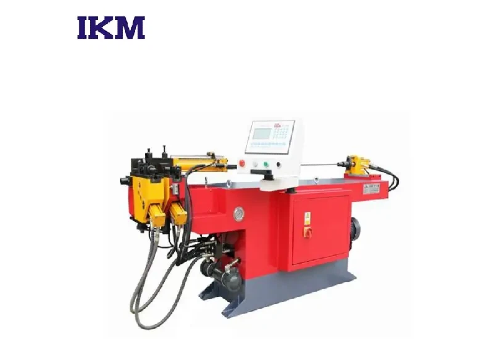
Traditionally, pipe bending machines would only offer bending along a single axis—either horizontally or vertically. Multi-axis CNC pipe bending machines have evolved to provide much more flexibility, allowing operators to bend pipes in multiple directions simultaneously.
Three-Dimensional Bending: Some advanced machines allow for 3D bending, where pipes can be bent along three axes (X, Y, and Z) in a single operation. This allows for highly complex geometries, making it ideal for industries that require custom bends for intricate parts or components.
Complex Geometries and Shapes: Multi-axis bending capability is particularly useful for producing complex shapes such as spirals, elbows, and three-dimensional structures. For example, in the aerospace industry, parts often require precise multi-angle bends that cannot be achieved with traditional bending methods.
Efficient Workflow: Multi-axis machines can reduce the need for multiple setups and complex tooling, leading to faster production cycles. This results in more efficient workflows, particularly for manufacturers who produce high volumes of parts with varying bending specifications.
The incorporation of smart sensors and automated quality control systems has greatly improved the consistency and reliability of CNC electric pipe bending machines. These sensors help detect issues early in the bending process, ensuring that the final product meets the required quality standards.
Real-Time Error Detection: Many modern CNC pipe benders are equipped with sensors that detect issues such as pipe slippage, excessive force, or improper bending angles. The system can automatically stop the machine or adjust the parameters to prevent defects from occurring.
Automated Quality Control: Advanced machine vision systems can inspect the bent pipes in real time, comparing them against the design specifications. This automated quality control process reduces human error and ensures that only high-quality parts are produced.
Predictive Maintenance: Smart sensors can also be used for predictive maintenance, monitoring components for wear and tear, temperature fluctuations, and other potential issues. This allows operators to address maintenance needs before they lead to equipment failure, minimizing downtime and increasing machine reliability.
The evolution of user interfaces has made CNC electric pipe bending machines more accessible and easier to operate. Today’s machines often feature intuitive touchscreen interfaces, remote control capabilities, and automated setup processes.
Touchscreen Control Panels: Modern machines offer user-friendly touchscreens that display important information such as bending angles, pipe specifications, and machine status. These interfaces allow operators to input data quickly and easily, reducing the learning curve and improving productivity.
Remote Control Options: Some machines now come with remote control options that allow operators to monitor and control the machine from a distance. This can be useful when multiple machines are running simultaneously, or when operators need to adjust settings without physically being at the machine.
Automation and Setup: Many advanced CNC pipe benders feature automated setups for commonly used bending programs. This reduces the time spent configuring the machine, enabling faster production times.
CNC electric pipe bending machines are transforming modern manufacturing with their improved precision, efficiency, and versatility. Innovations in computer controls, electric drive systems, servo motors, multi-axis bending, and smart sensors have made these machines capable of handling even the most complex bending tasks. As industries demand higher-quality products with shorter lead times, these advanced machines are increasingly essential for meeting these expectations.
For businesses seeking top-tier CNC electric pipe bending machines, Zhejiang King-Mazon Intelligent Manufacturing Corp., Ltd. provides cutting-edge solutions that combine precision, advanced technology, and user-friendly features. With a focus on innovation and quality, King-Mazon is a reliable choice for any pipe bending needs, offering the flexibility and reliability needed to stay competitive in today’s fast-paced market.


