


Views: 0 Author: Site Editor Publish Time: 2025-09-16 Origin: Site


In modern manufacturing and industrial operations, productivity is a key determinant of competitiveness and profitability. Factories and workshops constantly seek ways to streamline workflows, reduce labor costs, and maintain high-quality output. One area where efficiency can be significantly improved is in the bending and shaping of metal pipes and tubes. Traditional manual methods are often labor-intensive, slow, and prone to inconsistencies, which can lead to wasted materials and increased production costs.
Automated pipe bending machines have emerged as a transformative solution, combining precision, speed, and consistency to optimize production processes. By integrating automation into pipe bending, manufacturers can achieve higher output, reduce errors, and improve workplace safety. This article explores how automated pipe bending machines improve productivity, the types of machines available, key features to consider, and best practices for maximizing efficiency in industrial operations.
An automated pipe bending machine is a mechanical device that bends metal pipes or tubes according to programmed specifications with minimal human intervention. Unlike manual or semi-automatic machines, automated systems use motors, hydraulic systems, and computer numerical control (CNC) technology to precisely control the bending angle, radius, and sequence.
The primary advantage of automation is consistency. Automated machines can produce identical bends across multiple pipes, reducing rework and material waste. They also enhance speed, allowing high-volume production that would be impossible to achieve with manual labor. Additionally, automation minimizes physical strain on operators, improving workplace safety and reducing fatigue-related errors.
There are several types of automated pipe bending machines, each suited for different materials, diameters, and production needs. Understanding these types helps manufacturers select the right machine for their operations.
CNC electric benders use computer-controlled motors to perform precise bends automatically. Operators can program specific angles, radii, and sequences for single or multiple pipes, making these machines ideal for complex and repetitive tasks. CNC electric machines are widely used in automotive manufacturing, furniture production, and industrial fabrication, where consistent quality and high-speed production are critical.
Hydraulic CNC machines combine hydraulic pressure with computer control to handle thicker pipes or metals that are difficult to bend manually. These machines deliver high force while maintaining smooth and accurate bends, making them suitable for heavy-duty industrial applications, such as construction piping, shipbuilding, and structural frameworks.
Rotary draw and roll bending machines are specialized automated systems designed to bend pipes into specific shapes without collapsing or wrinkling. Rotary draw machines are excellent for tight, precise bends, while roll bending machines are ideal for larger radius curves or circular arcs. Automation in these machines ensures repeatable results and reduces manual adjustments, improving overall workflow efficiency.
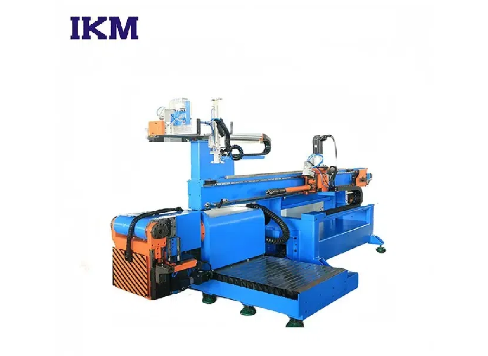
Automated machines significantly reduce the time required to bend pipes compared to manual methods. CNC systems can perform multiple bends on different pipes in rapid succession without the need for manual repositioning. This increase in speed allows workshops to complete more tasks in less time, directly boosting output.
Precision is critical in industries where even minor deviations in pipe angles can affect assembly or system performance. Automated machines provide exact control over bending angles and radii, ensuring consistent quality across all pieces. This eliminates rework and material wastage, which are common in manual bending processes, and maintains a high standard of finished products.
By automating repetitive bending tasks, fewer operators are needed to manage production. This allows skilled workers to focus on higher-value activities, such as programming the machine, inspecting quality, or managing workflow. Reducing the reliance on manual labor also minimizes the risk of fatigue-related errors and injuries.
Automated pipe bending machines can be programmed to handle a variety of pipe sizes, materials, and bending sequences. This flexibility allows workshops to switch between different production tasks quickly without extensive setup changes, enabling manufacturers to respond to varied customer demands efficiently.
Inconsistent bends in manual operations often result in scrap pipes or rework. Automation ensures precise bending every time, reducing errors and conserving raw materials. Over time, this translates into substantial cost savings and a more environmentally friendly production process.
Manual pipe bending can be physically demanding and sometimes hazardous, particularly with thicker or longer pipes. Automated machines reduce direct contact with heavy pipes and moving components, lowering the risk of injuries. Safety features, such as emergency stop functions and protective guards, further protect operators during high-volume production.
When selecting an automated pipe bending machine, manufacturers should evaluate several critical features to ensure optimal performance and productivity.
Machines with CNC control allow operators to program bending sequences, angles, and radii for different pipes. This feature is essential for maintaining consistency, automating complex tasks, and reducing setup time between jobs.
The power system determines the machine’s bending capacity and efficiency. Hydraulic systems are suited for heavy-duty tasks, while electric systems provide fast, precise bending for medium-duty applications. Some machines combine both systems for maximum versatility.
A high-quality automated machine should accommodate a range of pipe diameters and wall thicknesses. It should also handle different metals, including steel, aluminum, copper, and alloys, to meet varied production requirements.
Machines should offer high repeatability, meaning identical bends can be achieved across multiple pipes. This ensures product quality, reduces material waste, and enhances production efficiency.
Safety is paramount in automated operations. Look for machines with protective guards, emergency stop buttons, overload protection, and secure clamping systems. These features protect operators while maintaining smooth production.
Automated machines with easy access to critical components, simple lubrication points, and readily available replacement parts reduce downtime and maintenance costs, ensuring continuous production.
To fully benefit from automated pipe bending machines, workshops should adopt best practices that enhance efficiency and longevity.
Proper Training: Operators should receive comprehensive training on machine programming, operation, and safety protocols.
Regular Maintenance: Lubricate moving parts, inspect hydraulic systems, and check electrical connections to prevent breakdowns.
Optimized Workflow: Arrange workspace layout to facilitate pipe loading, bending, and unloading efficiently.
Quality Monitoring: Implement inspections at key stages to detect issues early and maintain high product standards.
Material Preparation: Use pre-cut and correctly sized pipes to minimize adjustments and speed up the bending process.
Automated pipe bending machines are used in a wide range of industries. In automotive manufacturing, they shape exhaust systems, hydraulic lines, and chassis components. In construction, they bend structural pipes for plumbing, HVAC systems, and frameworks. Furniture and interior design industries use these machines to produce decorative frames, handrails, and tubular structures. Additionally, industries such as shipbuilding, aerospace, and energy rely on automated bending machines to achieve precision and high-volume production efficiently.
The versatility and reliability of automated machines make them indispensable tools for workshops aiming to improve productivity and maintain consistent quality across diverse applications.
The future of automated pipe bending machines is closely tied to advances in digital control, smart sensors, and artificial intelligence. CNC systems are becoming more sophisticated, allowing operators to store complex bending programs and simulate bending sequences before production. Smart sensors can monitor load, pipe alignment, and bending accuracy in real-time, automatically adjusting parameters to ensure perfect results.
Automation is also moving towards fully integrated production lines, where pipe bending machines communicate with cutting, welding, and assembly systems, creating a seamless, highly efficient manufacturing process. These trends point to increased productivity, reduced labor costs, and higher-quality output in the coming years.
Automated pipe bending machines have revolutionized industrial and workshop operations by combining speed, precision, and repeatability with reduced labor requirements. They improve productivity by minimizing material waste, ensuring consistent quality, enhancing workplace safety, and providing flexible production capabilities. Selecting the right machine involves considering CNC control, power systems, pipe compatibility, repeatability, safety features, and ease of maintenance.
By implementing automated pipe bending technology and following best practices, workshops can optimize production efficiency and maintain high standards across a variety of applications. For manufacturers seeking reliable, advanced, and efficient solutions, Zhejiang King-Mazon Intelligent Manufacturing Corp., Ltd. offers a range of automated pipe bending machines designed to meet the highest standards of performance, precision, and productivity, making them a trusted partner for industrial operations worldwide.


