


Views: 0 Author: Site Editor Publish Time: 2025-06-30 Origin: Site


In a manufacturing or fabrication workshop, pipe bending is a critical process used to create pipes with precise curves, angles, and radii. Whether it’s for plumbing systems, structural frameworks, or automotive exhausts, pipe bending is essential for ensuring that pipes fit properly and perform efficiently. To achieve these bends, businesses rely on specialized tools known as pipe bending machines.
There are two primary types of pipe bending machines: manual and automated. Each offers distinct advantages and disadvantages, and choosing the right one for your workshop depends on several factors, including production volume, complexity of bends, available budget, and labor costs. This article will compare manual and automated pipe bending machines, helping you determine which one is the best fit for your specific workshop needs.
A pipe bending machine is a piece of equipment used to bend pipes made of various materials (such as steel, copper, aluminum, and PVC) into specific shapes or angles. These machines allow manufacturers to create curved pipes for a range of applications, from industrial machinery to plumbing systems.
The bending process typically involves applying force to the pipe while it’s placed between specialized dies. Pipe bending machines come in different forms, with some machines designed for manual operation and others for full automation. The key difference between manual and automated pipe bending machines lies in the level of human involvement and the complexity of the bending process.
Manual pipe bending machines are operated by hand, and the bending process requires significant physical input from the operator. These machines are often more affordable and are ideal for low-volume production, small workshops, or jobs requiring flexibility and simple bends. Let’s dive deeper into the features, advantages, and limitations of manual pipe bending machines.
Manual pipe bending machines use a simple mechanical system where the operator manually adjusts the machine’s settings to bend a pipe. The operator typically feeds the pipe into the machine, adjusts the bending arm or handle, and applies force to manually bend the pipe around a die.
These machines can be used to bend a variety of pipe sizes and shapes, depending on the configuration of the machine. Some manual machines are capable of bending pipes with different radii, while others are designed for more specific applications.
Cost-Effective for Small Workshops:
Manual pipe bending machines are generally more affordable compared to automated models. The lower upfront cost makes them an excellent choice for smaller businesses or workshops with limited budgets. Since they don’t require advanced machinery or automation, these machines are perfect for smaller-scale operations.
Simple Operation:
These machines are relatively easy to operate. Most manual pipe benders require only basic training, which means you can quickly get up to speed and start using the machine. This simplicity makes them well-suited for jobs that require moderate precision without the need for advanced technology.
Flexibility:
Manual pipe bending machines offer great flexibility in terms of pipe sizes and materials. Operators can adjust settings manually to accommodate different pipe diameters and thicknesses, which is ideal for custom projects or small-batch production.
Minimal Maintenance:
Since manual machines have fewer complex parts compared to automated models, they tend to require less maintenance. The simplicity of the mechanical systems makes it easier to troubleshoot and fix issues if they arise, saving time and costs associated with machine repairs.
Labor-Intensive:
Manual pipe bending requires significant physical effort from the operator. The operator must manually adjust the pipe and apply force to achieve the desired bend, which can be tiring during long production runs or when working with larger materials.
Limited Precision:
While manual machines are suitable for basic bends, achieving the highest level of precision can be difficult. Variability in the pressure applied by the operator can result in inconsistent bends, leading to minor defects or discrepancies in the final product.
Slower Production Speed:
Manual machines are generally slower than automated systems, especially when handling large volumes of pipe bending. The speed of the process depends on the skill and efficiency of the operator, making it less suitable for large-scale production.
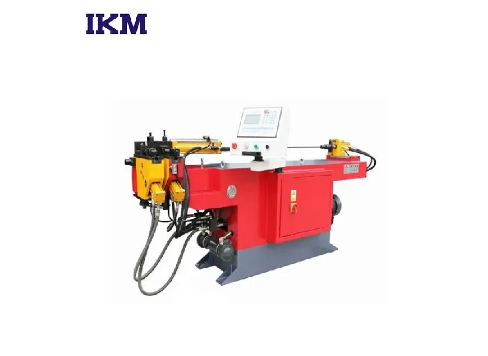
Automated pipe bending machines, also known as CNC (Computer Numerical Control) pipe benders, offer a higher degree of precision and efficiency compared to manual machines. These machines use automated systems controlled by computer programs to bend pipes according to pre-set specifications. They are designed to handle more complex tasks and high-volume production with minimal human intervention.
Automated pipe bending machines are equipped with CNC technology that allows the operator to input specific bending instructions into the machine’s control panel. The machine then follows these instructions to bend the pipe automatically, adjusting parameters such as angle, radius, and bending speed as required.
Automated machines are capable of handling a wide variety of pipe sizes and can perform multiple bends on a single pipe without requiring any manual adjustments. These machines are often equipped with advanced sensors that provide real-time feedback to ensure the bending process is precise and consistent.
Precision and Accuracy:
One of the biggest advantages of automated pipe bending machines is their high level of precision. Since the process is controlled by a computer, the machine can repeat the same bends with exact consistency, ensuring that each pipe meets the required specifications. This precision is critical in industries like aerospace, automotive, and manufacturing, where small deviations in pipe bends can result in costly errors.
Increased Production Speed:
Automated pipe bending machines can perform multiple bends in a shorter amount of time compared to manual machines. They can process high volumes of pipes quickly, making them ideal for large-scale manufacturing operations where time is of the essence.
Reduced Labor Costs:
Since automated pipe bending machines require minimal manual intervention, they reduce the amount of labor required to operate the machine. With automation, fewer workers are needed for the bending process, which can result in lower overall labor costs.
Improved Consistency:
Automation ensures that every bend is made with consistent pressure, speed, and precision, which reduces the risk of errors and defects. Automated machines can be programmed to work with specific materials and pipe types, ensuring that each pipe is bent to the exact specifications.
Complex Bending Capabilities:
Automated machines can easily handle more complex bending tasks, such as multi-axis bending or bending pipes with irregular shapes. They can achieve tighter radii and more intricate curves that would be difficult, if not impossible, to achieve manually.
Lower Risk of Human Error:
With automated systems, the risk of human error is significantly reduced. The machine follows the programmed instructions, ensuring that the bends are accurate and consistent with minimal chances of mistakes caused by fatigue or lack of focus.
Higher Initial Cost:
Automated pipe bending machines are more expensive upfront than manual machines. The cost of purchasing and installing CNC-controlled systems can be prohibitive for small businesses or workshops with limited budgets.
Complexity in Operation:
Automated machines require more extensive training to operate. Operators need to understand CNC programming and how to troubleshoot potential issues with the software or machine. The complexity of the machine can be a challenge for businesses that are new to automated systems.
Maintenance Costs:
While automated pipe bending machines require less human labor, they involve more complex systems that may require more frequent maintenance. Additionally, repair costs for CNC machines can be higher due to the advanced technology and specialized parts involved.
When deciding between manual and automated pipe bending machines, there are several factors to consider:
Manual Machines: Ideal for small-scale production or custom jobs with low volume requirements. Manual machines are flexible and cost-effective for businesses that do not need to produce large quantities of pipes.
Automated Machines: Best suited for high-volume production environments where efficiency, consistency, and precision are paramount. Automated machines can handle large batches of pipes quickly and accurately.
Manual Machines: A more budget-friendly option, manual pipe bending machines are typically less expensive and have lower maintenance costs. They are an excellent choice for businesses with limited budgets or those that only need to bend pipes occasionally.
Automated Machines: While automated machines come with a higher upfront cost, the long-term savings on labor costs, increased efficiency, and reduced errors may justify the investment, especially for businesses with high-volume needs.
Manual Machines: Suitable for simpler, less complex bends. If your workshop requires tight radii or intricate shapes, manual machines may not provide the level of precision needed.
Automated Machines: Perfect for handling complex bends with high precision. If your business needs to create intricate or multi-axis bends, an automated machine is the better choice.
Manual Machines: Easier to operate with less training required, making them suitable for businesses with a smaller workforce or less technical expertise.
Automated Machines: Require skilled operators who are familiar with CNC programming and machine maintenance. Businesses must be willing to invest in employee training.
Choosing the right pipe bending machine for your workshop depends on several factors, including production volume, complexity of bends, budget, and available workforce. Manual pipe bending machines are ideal for small workshops, custom jobs, and low-volume production, while automated machines excel in high-volume environments that require precision and speed.
For businesses looking for high-quality, efficient, and reliable pipe bending machines, Zhejiang King-Mazon Intelligent Manufacturing Corp., Ltd. offers advanced pipe bending solutions that meet the diverse needs of various industries. Their automated and manual pipe bending machines are designed to provide maximum performance, precision, and durability, ensuring your workshop remains competitive and efficient.


