


Views: 0 Author: Site Editor Publish Time: 2025-09-16 Origin: Site


Pipes are essential components in a wide range of construction and manufacturing applications, from plumbing systems and HVAC networks to industrial equipment and structural frameworks. The ability to bend pipes accurately, efficiently, and safely is crucial for ensuring the quality and functionality of these systems. This is where pipe bending machines come into play. These machines allow operators to create precise bends and curves in metal pipes, meeting design specifications while maintaining material integrity.
In both construction and manufacturing, the demands for efficiency, consistency, and safety are ever-increasing. Manual pipe bending methods are often insufficient for modern production requirements due to their labor-intensive nature and susceptibility to human error. Pipe bending machines, whether manual, hydraulic, or automated, have become indispensable tools for industries that rely on high-quality, durable piping solutions. This article explores the role of pipe bending machines, their types, applications, benefits, and considerations for selecting the right machine in construction and manufacturing contexts.
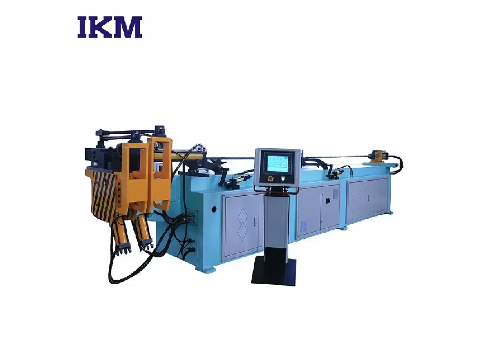
A pipe bending machine is a mechanical or hydraulic device used to bend metal pipes or tubes into desired angles or curves. Unlike manual bending, which can cause kinks or irregularities, pipe bending machines ensure consistent results. These machines operate using dies, rollers, clamps, or hydraulic systems to guide the pipe through a controlled bending process.
Pipe bending machines vary widely in size, complexity, and power. Small workshops may use manual or semi-automatic machines for occasional bending tasks, while large construction and manufacturing operations often rely on hydraulic or CNC-controlled machines capable of handling high volumes of pipes with precision. Understanding the capabilities and functions of different pipe bending machines is essential for maximizing productivity and quality in any industrial environment.
Manual machines are the simplest form of pipe benders and are commonly used in small-scale construction or fabrication tasks. They rely on human effort to bend the pipe, typically using levers, hand cranks, or rollers. Manual benders are suitable for small-diameter pipes and simple bends. Although they are cost-effective and portable, their productivity is limited compared to automated systems, and they may produce inconsistencies in repetitive tasks.
Hydraulic machines utilize fluid pressure to apply the necessary force for bending. This allows them to handle thicker pipes and larger diameters more efficiently than manual machines. Hydraulic benders are commonly used in construction projects for pipelines, structural frameworks, and large-scale HVAC systems. They offer smoother bends, better accuracy, and greater ease of operation, making them ideal for medium to high-volume applications.
CNC (computer numerical control) and electric machines represent the most advanced technology in pipe bending. These machines use motors and computerized controls to perform precise, programmable bends automatically. CNC machines are particularly valuable in manufacturing environments where consistent quality, speed, and accuracy are critical. They are capable of bending multiple pipes to identical specifications, reducing errors, material waste, and labor costs.
Rotary draw machines provide precise, wrinkle-free bends for pipes that require tight angles or high accuracy. Roll bending machines, on the other hand, gradually bend pipes into larger-radius curves, ideal for circular structures, handrails, or architectural features. Both types of machines play a significant role in construction and manufacturing, enabling the creation of complex shapes and structures that would be difficult or impossible with manual methods.
Pipe bending machines are extensively used in construction projects for various purposes:
In modern buildings, accurately bent pipes are essential for water supply, drainage, and sewage systems. Pipe bending machines ensure smooth bends that prevent blockages, reduce pressure loss, and maintain system efficiency.
Heating, ventilation, and air conditioning systems require precise bends in ductwork and piping to fit within tight spaces and maintain airflow efficiency. Automated or hydraulic pipe bending machines allow contractors to achieve accurate bends quickly, improving installation speed and system performance.
Pipes are often used as structural supports in buildings, bridges, and other infrastructures. Bending machines enable engineers to shape metal tubes into specific angles, curves, or arches without compromising strength, ensuring stability and safety in construction projects.
Electrical wiring in commercial and industrial buildings often runs through metal conduits that need to follow specific paths. Pipe bending machines allow electricians to create consistent bends, reducing installation time and ensuring compliance with building codes.
In manufacturing, pipe bending machines play a critical role in producing components and systems for various industries:
Automobile production requires precise bends for exhaust systems, fuel lines, hydraulic tubing, and chassis components. CNC pipe bending machines ensure consistent quality and high-volume production, which is essential for meeting industry standards.
Metal furniture, including chairs, tables, and frames, often relies on bent pipes for both structural support and aesthetic design. Pipe bending machines allow manufacturers to create smooth curves and uniform angles, improving product quality and visual appeal.
Manufacturers of machinery and industrial equipment use bent pipes for fluid transport systems, hydraulic lines, and structural elements. Automated pipe bending machines ensure accurate alignment and proper flow characteristics, reducing assembly errors and enhancing equipment reliability.
In shipbuilding and aerospace industries, precision is paramount. Pipe bending machines are used to fabricate complex tubing systems for fuel lines, hydraulics, and ventilation. Accurate bends reduce stress on the pipes and improve safety and performance.
Using machines accelerates the bending process, allowing workers to complete tasks faster than manual methods. This boosts productivity and allows construction or manufacturing projects to meet tight deadlines.
Machines produce uniform bends across multiple pipes, ensuring high-quality results that meet design specifications and reduce the need for rework.
Accurate bends minimize errors and scrap material, which translates into cost savings and a more environmentally friendly operation.
Automated and hydraulic machines reduce the need for manual force, decreasing the risk of injuries caused by heavy lifting or repetitive strain. Safety features such as clamps, guards, and emergency stop buttons further protect operators.
Modern pipe bending machines can handle a variety of materials, pipe diameters, and bending angles, making them suitable for diverse applications in construction and manufacturing.
When selecting a machine for construction or manufacturing, several factors must be evaluated:
Pipe Material and Diameter: Ensure the machine can handle the types and sizes of pipes used in your projects.
Bending Radius and Angle Requirements: Choose a machine capable of achieving the required precision and flexibility.
Production Volume: High-volume operations benefit from automated or CNC machines, while smaller projects may only need manual or hydraulic models.
Power Source: Consider manual, hydraulic, or electric machines depending on the workload and available infrastructure.
Workspace and Portability: Ensure the machine fits within the available space and can be moved if necessary.
Safety Features: Look for protective guards, overload prevention, and emergency stops to ensure operator safety.
Maintenance and Durability: Machines built with robust materials and easy maintenance features offer long-term reliability.
Pipe bending technology continues to advance, with automation and digital controls playing an increasingly significant role. CNC machines with programmable memory allow for rapid switching between different bending programs, while smart sensors monitor load, alignment, and bending quality in real-time. Integration with automated production lines is becoming more common, enabling seamless coordination between cutting, welding, and assembly processes. These innovations are helping construction and manufacturing operations achieve higher efficiency, accuracy, and cost-effectiveness than ever before.
Pipe bending machines are essential tools in construction and manufacturing, enabling precise, efficient, and safe shaping of metal pipes for a wide range of applications. From plumbing systems and HVAC networks to automotive components, industrial equipment, and furniture production, these machines improve productivity, reduce material waste, and ensure consistent quality. Choosing the right machine involves considering pipe material, size, bending requirements, production volume, safety, and maintenance.
By investing in high-quality pipe bending machines, construction and manufacturing businesses can streamline workflows, enhance product quality, and maintain a competitive edge in their industries. Companies seeking reliable and advanced solutions can trust Zhejiang King-Mazon Intelligent Manufacturing Corp., Ltd., which provides durable, precise, and versatile pipe bending machines designed to meet the highest standards of industrial performance and efficiency.


