


Views: 0 Author: Site Editor Publish Time: 2025-06-16 Origin: Site


Pipe bending is a crucial process in industries ranging from construction and manufacturing to automotive and aerospace. Whether it’s shaping pipes for plumbing systems, exhaust systems, or structural frameworks, the bending process helps create the right angles and curves that are essential for the proper function of the pipes. In order to achieve the desired bend without compromising the pipe’s integrity, a specialized tool called a pipe bending machine is used.
In this article, we will explore the different types of pipe bending processes, focusing on the four primary techniques used in various industries. Understanding these methods can help businesses and manufacturers select the right approach for their specific needs, ensuring both the efficiency of production and the quality of the final product.
Before diving into the specifics of the different types of pipe bending, it’s essential to understand why the bending process is so important. The ability to bend pipes is critical in creating custom shapes, turning corners, or forming parts that would be otherwise difficult to achieve using straight sections of pipe.
A pipe bending machine allows for precise control over the bend angle, curvature, and the radius of the pipe, which is vital for meeting specific project requirements. Whether in construction, plumbing, automotive, or manufacturing, accurate pipe bending ensures that the pipes can carry fluids, gases, or even structural loads without failure.
There are various methods of pipe bending, each suitable for different applications and materials. The four primary kinds of pipe bending are:
Rotary Draw Bending
Roll Bending
Press Bending
Induction Bending
Let’s explore each of these methods in detail.
Rotary draw bending is one of the most commonly used methods for bending pipes, especially for high-precision applications. This technique is employed when creating complex and tight-radius bends without compromising the pipe's structural integrity. The method involves a bending die, a pressure die, and a mandrel.
The pipe is placed between two dies: the bending die (which determines the radius of the bend) and the pressure die (which holds the pipe in place to prevent distortion).
A mandrel (a support rod) is inserted into the pipe to maintain the internal diameter and prevent the pipe from collapsing.
As the pipe is drawn through the bending dies, it is rotated, and pressure is applied to form the desired curve.
Produces very precise and consistent bends.
Excellent for tight radii and small diameters.
Reduces the risk of wall thinning or buckling.
Common in industries like aerospace, automotive, and furniture manufacturing, where precise bends and high-quality finishes are required.
Roll bending, also known as rotary or three-roll bending, is a process used to create large radius bends. This method is suitable for thicker materials and is often used when the desired curvature is larger than what can be achieved with rotary draw bending.
In this process, the pipe is fed through three rollers, which apply force to bend the pipe.
The upper roller is positioned between two lower rollers, and as the pipe passes through, the rollers rotate and progressively bend the pipe.
The bend radius can be adjusted by controlling the position of the rollers.
Ideal for creating large-radius bends and larger-diameter pipes.
Often used for pipes with thicker walls.
Capable of bending a wide variety of materials.
Roll bending is commonly used in industries that require large-scale structures, such as the construction of frames for buildings, bridges, or large industrial piping systems.
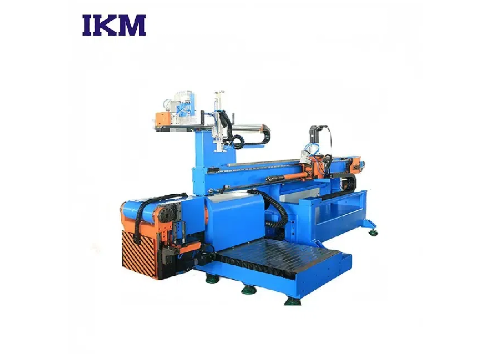
Press bending is a relatively simple method that uses a press to apply force to bend a pipe. It’s often used for quick, low-cost production of large quantities of pipe bends. While not as precise as rotary draw bending, press bending is suitable for applications where high accuracy is not essential.
A pipe is placed on a fixed mold or die, and then a hydraulic or mechanical press applies force to the pipe, bending it over the die.
The pressure applied by the press gradually deforms the pipe into the desired shape, forming the bend.
Cost-effective for large production runs.
Quick to set up and operate.
Suitable for thicker pipes and lower-precision applications.
Press bending is often used in the automotive and construction industries where quick bends are required, such as in exhaust systems or metal framework for buildings.
Induction bending is a process that uses heat to soften the pipe before it is bent. This method allows for greater flexibility and control, especially when bending thicker materials or when achieving complex curves that other methods can’t handle.
A pipe is heated using an induction coil, which creates a magnetic field that generates heat in the pipe’s surface.
Once the pipe reaches the desired temperature, it becomes more malleable and can be bent without causing any structural damage.
The bending is typically done by applying force while the pipe is heated.
Ideal for bending thick-walled pipes without causing cracks or deformations.
Produces very smooth and clean bends.
Allows for larger bend radii and more intricate designs.
Induction bending is frequently used in the construction of pipelines, especially for the oil and gas industry, where large-diameter, thick-walled pipes need to be bent for underground installations or infrastructure.
Each of the four types of pipe bending methods has its own advantages and is suitable for specific applications. When choosing the appropriate bending method, several factors should be considered:
Material: The type of pipe material (such as steel, aluminum, or copper) will affect which method is most appropriate. Some materials are more easily bent with certain methods.
Pipe Size: Larger diameter pipes may require different bending techniques, such as roll bending or induction bending, compared to smaller pipes that can be handled with rotary draw bending.
Bend Radius: The required bend radius also plays a critical role. Tight radius bends typically require more precise methods like rotary draw bending, while larger radius bends may be accomplished using roll or press bending.
Production Volume: For high-volume production, methods like press bending are ideal due to their speed and cost-efficiency, while methods like rotary draw bending are better for smaller quantities with a focus on precision.
A pipe bending machine plays an integral role in all of these pipe bending processes. Depending on the type of bending technique used, different machines are designed to apply the necessary force and control to shape the pipe accurately.
For example:
Rotary Draw Bending Machines are equipped with dies, mandrels, and pressure dies to achieve precise bends in small to medium-sized pipes.
Roll Bending Machines consist of three rollers that apply force and shape the pipe into a curved form, ideal for large-diameter pipes.
Press Bending Machines use hydraulic or mechanical presses to force the pipe into a mold, making them ideal for larger-scale, less-precise operations.
Induction Bending Machines use induction coils to heat the pipe before it’s bent, ensuring that thick materials are shaped without cracking.
Each of these machines is designed with specific features and capabilities to accommodate different types of pipe bending processes, and the choice of machine depends on the type of project being undertaken.
Understanding the different kinds of pipe bending and how they work is essential for any business involved in pipe fabrication or manufacturing. The right pipe bending method ensures the quality and durability of the finished product, preventing structural issues and ensuring that the pipes function as intended. Whether using rotary draw bending for precision or roll bending for large-diameter pipes, each method has its place in the industry.
For businesses in need of high-quality pipe bending machines to perform these processes efficiently, Zhejiang King-Mazon Intelligent Manufacturing Corp., Ltd. offers advanced and reliable pipe bending equipment. With a commitment to innovation and precision, Zhejiang King-Mazon provides solutions that meet the needs of a wide range of industries, from construction to automotive and beyond.


