


Views: 0 Author: Site Editor Publish Time: 2025-12-02 Origin: Site


NC (Numerical Control) and CNC (Computer Numerical Control) bending machines are essential tools in various industries, designed to automate the tube and pipe bending process. While both types aim to enhance efficiency and precision, they differ significantly in their control, complexity, and automation. NC machines rely on manual input from operators to program each bend, making them suitable for simpler, lower-volume tasks. On the other hand, CNC machines are controlled by computers, providing higher flexibility, superior precision, and the ability to perform complex, multi-axis bends with minimal human intervention. Understanding the distinctions between these machines is crucial for selecting the right equipment based on specific production needs, ensuring optimal performance, cost-efficiency, and accuracy in the manufacturing process.
An NC (Numerical Control) bending machine is a type of tube bender that is controlled using a basic numerical control system. The operator inputs a set of instructions into the machine, which then uses these commands to perform bending operations. Unlike CNC (Computer Numerical Control) machines, which are fully automated and capable of handling more complex tasks, NC machines require more manual input for each bend, offering a simpler form of automation.
An NC bending machine works by receiving a series of instructions from the operator, typically in the form of numerical data, which specifies the bending angles, radii, and other parameters for each operation. The operator must manually input the data for each bend, and the machine will execute the bend based on those instructions. Unlike CNC machines, NC machines do not offer the same level of flexibility or automated programming for multi-step or complex bends, making them more suited to simpler and less intricate tasks.
Lower Cost: NC machines are generally more affordable than CNC machines due to their simpler design and manual input process, making them an attractive option for businesses with limited budgets or less complex bending needs.
Simplicity in Operation: The straightforward nature of NC machines makes them easy to operate and maintain, with fewer technical requirements and less advanced programming needed.
Suitable for Smaller Production Runs: NC bending machines are ideal for smaller production runs or less complex tasks where the bending requirements are straightforward, and high precision or high volume is not a major concern. They are a good fit for businesses or workshops that do not need the advanced capabilities of CNC machines but still require basic tube bending automation.
A CNC (Computer Numerical Control) bending machine is a highly advanced tube bender controlled by a computer system, which allows for fully automated and highly precise bending operations. Unlike NC machines, which require manual input for each operation, CNC machines use programmed instructions to automatically execute complex bending tasks, offering a higher level of flexibility and precision in tube bending.
A CNC bending machine operates by receiving a set of instructions, typically designed in CAD (Computer-Aided Design) software, which are then transferred to the machine’s control system. These instructions dictate the exact angles, radii, and sequences of the bends, enabling the machine to perform multiple bends in one cycle. CNC machines use automated systems to control the bending process, including the tube’s positioning and the tooling required for each bend, reducing the need for manual intervention. This capability allows CNC machines to handle more intricate and complex tube bending tasks with high accuracy.
Higher Precision and Repeatability: CNC bending machines are known for their exceptional precision and repeatability, ensuring that every bend is identical, even during long production runs. This makes them ideal for applications where consistency and accuracy are critical.
Capability for Handling Complex and Multiple Bends: Unlike simpler machines, CNC benders can handle complex bend sequences and multiple bends in a single cycle, allowing for intricate shapes and configurations that would be challenging or impossible with manual or NC systems.
Increased Productivity with Automation: CNC machines are fully automated, reducing the need for manual labor and enabling faster production times. Additionally, they can be integrated with other automated systems, such as robotic arms, to further streamline the process and enhance productivity. This makes them particularly suitable for high-volume production environments where speed, efficiency, and precision are crucial.
NC Bending Machines: These machines require manual input for each bending operation. The operator enters numerical instructions for each bend, and the machine performs the task based on those inputs. This process is more hands-on and requires active participation for each operation.
CNC Bending Machines: CNC machines are fully automated and programmable, meaning the machine is controlled by a computer system. Once programmed, the machine can perform multiple complex bends with minimal human intervention, offering greater flexibility and automation.
NC Bending Machines: NC machines are suitable for simpler bending tasks and are more limited in precision and complexity. While they can perform basic bends, they are less capable of handling intricate or multi-axis bends and may require adjustments for each operation.
CNC Bending Machines: CNC machines are highly precise and can handle complex, multi-axis bends with ease. They are ideal for producing intricate shapes and geometries, making them perfect for industries requiring high accuracy and repeatability.
NC Bending Machines: NC machines are best suited for low to medium production volumes. They can handle smaller batches of parts efficiently but may require more setup time and manual intervention for each bend.
CNC Bending Machines: CNC machines excel in high-volume production environments, where speed, consistency, and minimal variation are essential. The automated nature of CNC bending makes it ideal for large-scale production with high consistency across parts.
NC Bending Machines: Generally, NC machines are less expensive than CNC machines. Their simpler design and manual input system make them more cost-effective for smaller tasks or businesses with budget constraints.
CNC Bending Machines: CNC machines are more expensive due to their advanced automation, precision, and versatility. The higher upfront cost is offset by the increased efficiency and ability to handle more complex bending tasks, making them ideal for industries with high production demands.
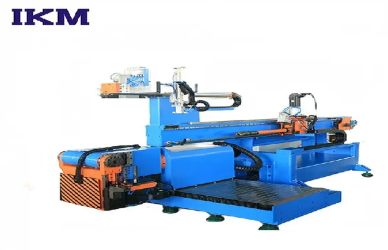
NC bending machines are ideal for simpler tasks or small production runs where cost efficiency is the primary concern and the required precision is moderate. These machines are perfect for businesses or workshops that need to perform basic tube bending operations without requiring highly complex or intricate bends. Some typical use cases include:
Small-scale manufacturing: When only a few parts need to be bent with less strict tolerances.
Prototyping: In cases where a limited number of parts are required for testing or early-stage production.
General-purpose bending: When high precision is not critical and the task involves straightforward bends with less demanding geometries.
CNC bending machines are best suited for high-precision and high-volume tasks, particularly where repeatability and complex bend sequences are required. These machines are highly automated, making them ideal for industries where precision, consistency, and intricate bends are critical. Some common use cases include:
Aerospace: Bending fuel lines, hydraulic tubes, and structural components for aircraft with complex, multi-axis bends.
Automotive: Manufacturing exhaust systems, roll cages, and custom components that require high precision and repeatability.
Mass manufacturing: Large-scale production of parts that require tight tolerances and high consistency, such as in electronics or appliance manufacturing.
No, NC bending machines are limited to simpler bends and cannot handle complex multi-axis bends. Unlike CNC machines, which are designed for intricate geometries and multiple bends, NC machines require manual input for each operation and lack the automation needed for advanced bending.
Yes, CNC bending machines are more expensive to maintain due to their advanced technology, software updates, and the need for specialized technicians. Parts for CNC machines can also be more costly to replace, whereas NC machines have simpler control systems and are less expensive to maintain.
Automation in CNC machines improves efficiency by reducing manual input, allowing machines to perform multiple bends automatically. This boosts consistency, speeds up production, and minimizes errors, leading to faster and more cost-effective manufacturing.
Upgrading an NC bending machine to CNC is generally not practical or cost-effective. The control systems and hardware differences make a full upgrade expensive, so it's often more efficient to invest in a new CNC machine for the benefits of automation and precision.
To wrap up, the primary differences between NC and CNC bending machines lie in their control systems, precision, and suitability for different tasks. NC machines rely on manual input for each operation, making them ideal for simpler, low-volume production where cost-effectiveness is important and precision requirements are less demanding. In contrast, CNC machines offer full automation, higher precision, and the ability to execute complex, multi-axis bends, making them perfect for high-volume production with intricate and precise requirements.
Choosing the right bending machine is essential, and the decision should be based on factors such as production scale, complexity, precision needs, and budget. For smaller tasks and budget-conscious operations, an NC machine may be sufficient, while a CNC machine is the better option for more advanced, high-precision, and high-volume bending needs. Understanding these distinctions ensures that the best machine is selected for the job at hand.


