


Views: 0 Author: Site Editor Publish Time: 2026-05-04 Origin: Site


Selecting the right pipe bending machine is one of the most critical decisions for manufacturers and fabricators who handle metal tube forming. Whether you are producing automotive exhaust systems, aircraft hydraulic lines, or stainless steel handrails, the right equipment determines both efficiency and precision. At Zhejiang King-Mazon Intelligent Manufacturing Corp., Ltd., we specialize in advanced bending technology that adapts to diverse industries. Understanding what size and type of machine you need will not only optimize your production but also prepare your workshop for future growth with high-quality, intelligent bending solutions.
Before deciding on a model or type, the first step is to define your material and pipe specifications. Every pipe bending process depends heavily on three key variables — outer diameter, wall thickness, and material type.
The outer diameter determines the bending radius capability. Larger diameters require stronger torque and more advanced control systems to maintain shape without wrinkling or flattening. Wall thickness, on the other hand, influences how much internal pressure the pipe can handle during bending. Thin-walled pipes often need mandrel support and precise pressure control to prevent deformation.
Material type defines the bending characteristics. Stainless steel, aluminum alloy, copper, titanium, and high-temperature alloys each respond differently to force and heat. For instance, titanium and stainless steel require greater power and more precise bending programs than softer materials like aluminum. Understanding your specific materials ensures that your selected machine can maintain consistent quality without excessive tool wear.
King-Mazon’s full-electric CNC models, such as the KM-A25-CNC and KM-A50-CNC, are designed to handle various materials including stainless steel, aluminum, and titanium alloys. These models provide stable, programmable torque and motion control that adjust automatically to different pipe dimensions and mechanical properties.
Different applications require different bending technologies. Knowing the distinction between manual, hydraulic, and CNC bending machines helps determine what level of automation and precision fits your production scale.
Manual pipe benders are simple, low-cost tools suitable for small-scale projects or on-site installations. They rely on operator strength and skill. While useful for occasional bending, they are limited by low repeatability and cannot handle complex multi-bend shapes. Manual options are practical for workshops that require flexibility rather than speed or mass production.
Hydraulic machines introduced a major leap in productivity and consistency. They use hydraulic power to drive the bending process, making them suitable for medium-scale operations. With adjustable pressure and die sets, they can manage thicker pipes and more durable materials. However, their repeatability still depends partly on operator control, and setup changes can be time-consuming when working with different radii or materials.
CNC (Computer Numerical Control) bending machines represent the highest standard of precision and automation. They integrate digital control systems that execute programmed movements for every axis — feeding, rotating, and bending — ensuring repeatable results across thousands of parts. A CNC model allows simultaneous multi-radius, multi-bend operations without repositioning the workpiece. For industries like aerospace or automotive manufacturing, this capability is essential.
King-Mazon’s fully-electric CNC pipe benders, such as the KM-A100-CNC and KM-A150-CNC, replace traditional hydraulic systems with electric servo motors, achieving smoother motion, lower noise, and higher energy efficiency. This design ensures accuracy within tight tolerances while reducing operating costs and maintenance.
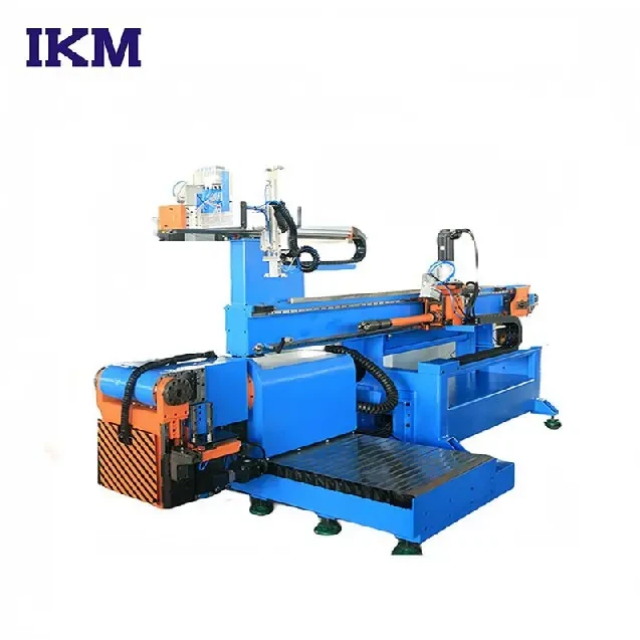
Each type of machine suits specific production needs and business stages. For a small repair shop, a manual or semi-hydraulic model may suffice. If your operation involves repetitive work or requires tight tolerances, CNC bending is the clear choice.
Manual machines are ideal for start-ups or occasional use. Hydraulic systems suit workshops that frequently change materials or pipe sizes but still work with moderate quantities. CNC bending machines, particularly full-electric ones, are the investment choice for long-term growth — offering not only speed and accuracy but also digital integration for smart manufacturing.
In recent years, manufacturers are moving toward CNC automation because it minimizes material waste, reduces human error, and improves overall productivity. King-Mazon’s CNC solutions combine these advantages with user-friendly interfaces and remote diagnostic capabilities, allowing operators to monitor bending quality in real time.
Choosing the right size of pipe bending machine depends on both your current needs and anticipated future requirements. A common mistake is selecting a machine that fits only your present pipe sizes. However, as projects diversify or industries evolve, you may need to bend thicker or larger pipes.
For example, a KM-A38-CNC model might serve small to medium automotive applications, while the KM-A80-CNC or KM-A114-CNC can handle larger industrial tubing for aerospace, shipbuilding, or construction pipelines. Larger machines provide not only higher torque but also wider bending radius options, accommodating complex shapes with multiple bends.
Think beyond your immediate orders. If your company plans to expand into new industries, investing in a higher-capacity CNC model today can save significant upgrading costs later. King-Mazon designs its full-electric CNC machines with modular architecture — making it easier to integrate additional axes, tooling, or digital control upgrades in the future.
Many buyers underestimate the importance of tooling. In bending operations, the right set of dies, mandrels, and wipers determines not just accuracy but also material surface quality and cycle time. The tooling system must align with both the machine’s bending capacity and the pipe material’s properties.
High-strength alloys often require mandrel bending to prevent collapse. Softer materials might need coated dies to prevent surface scratching. CNC machines from King-Mazon support multi-stack tooling configurations — meaning you can mount multiple die sets for different radii or pipe diameters in one setup. This drastically reduces downtime and enhances flexibility for high-mix, low-volume production.
Accessories like automatic loading systems, laser measuring sensors, and real-time correction modules further extend machine capability. These intelligent add-ons make production smoother, reduce scrap, and ensure consistent bending quality — crucial for industries that demand precise geometry such as aerospace and nuclear power equipment manufacturing.
Physical space and budget are practical constraints that should never be ignored. Fully-electric CNC machines may require more floor space and stable power supply, while manual units occupy less area but deliver limited output. King-Mazon offers models across a wide range of footprints — from compact KM-A15-CNC for small workshops to the KM-A150-CNC for heavy industrial facilities.
Budget-wise, it’s essential to calculate not only purchase price but also lifetime cost. CNC bending machines, though more expensive upfront, reduce material waste, lower maintenance, and increase output efficiency, giving a faster return on investment. Additionally, choosing a manufacturer that provides ongoing technical support and training is key to maintaining productivity.
King-Mazon provides comprehensive after-sales service and spare parts support worldwide. Our team ensures your bending line remains stable and efficient with software updates, online assistance, and customized maintenance programs.
Business needs evolve, and your bending technology should evolve with them. A phased approach allows gradual investment without disrupting production. Start with a medium-sized CNC model like KM-A38-CNC, then upgrade later to a larger, multi-stack system such as KM-A80-CNC or KM-A130-CNC as demand increases.
Since King-Mazon’s equipment is modular, upgrading often means adding features rather than replacing the entire system. You can expand capacity by adding automatic feeding systems, multi-radius tool stacks, or advanced software for complex bending profiles. This flexibility ensures your investment remains valuable even as market requirements change.
Planning your upgrade path from the start makes financial and technical sense. By choosing scalable CNC technology, you avoid being locked into obsolete mechanical systems and maintain your competitive advantage through every stage of growth.
Selecting the right bending system isn’t just about immediate production needs; it’s about preparing for sustainable, high-quality manufacturing. A pipe bending machine that matches your materials, capacity, and automation goals will deliver accuracy, efficiency, and long-term savings.
Zhejiang King-Mazon Intelligent Manufacturing Corp., Ltd. continues to lead innovation in full-electric and CNC tube bending systems for industries ranging from aerospace to automotive. If you’re exploring advanced solutions like a CNC pipe bending system, our team is ready to guide you in finding the ideal machine model and configuration for your workshop. Contact us today to discuss your requirements and take the next step toward intelligent, precise, and efficient tube forming.


