


Views: 0 Author: Site Editor Publish Time: 2026-10-08 Origin: Site


Bending pre-flanged tubes frequently results in costly scrap and tedious rework. Manufacturers attempting this complex fabrication task routinely encounter severe flange deformation. Furthermore, operators often struggle with weld-zone stress fracturing and compromised seal integrity. A successful bending operation demands absolute precision. To optimize production, manufacturers must achieve zero flange distortion while maintaining strict adherence to tight dimensional tolerances, all while ensuring repeatable cycle times for maximum operational efficiency.
Standard rotary draw benders simply cannot meet these stringent demands reliably, and manual workarounds invariably introduce unpredictable variables into the production workflow. Purpose-built equipment and specialized tooling are strictly required to address these unique mechanical challenges. Investing in dedicated machinery ensures the protection of critical components throughout the fabrication process. In this comprehensive guide, we will delve into the mechanical realities of processing tubes with pre-welded flanges, detail essential equipment evaluation criteria, and explore advanced CNC technologies designed to eliminate clearance bottlenecks entirely.
Standard tube bending machines frequently crush or warp pre-welded flanges because of inadequate clamping clearance and unmitigated stress transfer.
Selecting a specialized tube bender for tube with flange demands a thorough evaluation of tooling clearance, clamping mechanisms, and advanced rotational capabilities.
A CNC flange pipe bender equipped with specialized collets drastically minimizes human error, preventing micro-cracking in high-stakes materials such as aluminum and thin-wall stainless steel.
Advanced fabrication techniques, particularly bidirectional flange bending, enable the creation of complex geometries without compromising the structural integrity of pre-attached flanges.
Manufacturers face immediate physical constraints when executing flanged tube bending operations. The primary obstacle is the clearance bottleneck. Standard clamping dies and pressure dies often feature bulky profiles that inevitably interfere when a flange is located near the bend zone. When standard tooling closes, it frequently crushes the flange face, destroying the perfectly flat sealing surface necessary for proper installation and fluid integrity.
Stress transfer poses another severe mechanical challenge. During deformation, bending forces naturally travel down the tube material and concentrate heavily at the rigid intersection where the tube meets the flange. Consequently, the weld zone absorbs this intense kinetic energy. This concentrated stress often causes hidden micro-fractures inside the joint. Although operators might not detect this damage visually, the resulting weakened weld becomes a significant liability in high-pressure environments.
Material variables further complicate the bending process, as different metals react uniquely to applied mechanical stress. Soft or highly ductile materials typically require stricter tooling constraints. Common examples include:
Aluminum alloys: Highly prone to cracking under uneven pressure, these materials demand perfectly contoured clamping dies to distribute forces evenly.
Thin-wall stainless steel: Highly susceptible to wrinkling and ovality, making precise mandrel usage an absolute necessity for internal support.
Carbon steel: Generally more forgiving, yet still vulnerable to catastrophic weld-zone tearing if the clamping mechanism slips during operation.
Failing to manage these underlying mechanical realities introduces severe compliance risks, especially since high-pressure applications demand flawless structural integrity. Utilizing deformed flanges dramatically increases the risk of catastrophic system failures. Unevenly seated flanges routinely fail rigorous ASME pressure tests, and leaking joints consistently lead to expensive field repairs. Comprehensively understanding these physical constraints is essential for selecting superior fabrication methods and machinery.
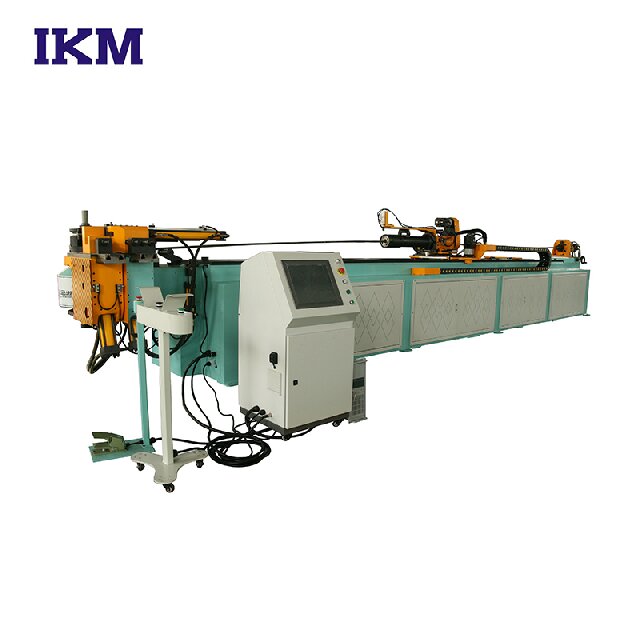
Selecting the correct equipment requires a meticulous evaluation of both tooling design and machine geometry. Manufacturers must prioritize specialized clamping solutions. A dedicated Tube Bender for Tube with Flange features relieved clamp dies engineered specifically for clearance. Many premium bending machines utilize custom collets rather than traditional block dies. These specialized collets grip the cylindrical tube securely while completely avoiding contact with the sensitive flange face, thereby isolating the component and preventing any unwanted surface marring.
Mandrel compatibility serves as another critical evaluation metric. Advanced through-mandrel configurations effectively prevent tube collapse near the flanged end. The machine must seamlessly allow the mandrel rod to pass directly through the flange opening, supporting the tube interior precisely at the tangent point. Without robust internal support, thin-wall materials will invariably buckle during the bend cycle. Therefore, verifying mandrel insertion depths and capabilities is essential before finalizing any equipment purchase.
Carriage interference limits actively dictate your minimum achievable tangent lengths. It is vital to evaluate the physical distance between the bend head and the carriage assembly. Processing short-tangent flanged tubes presents a unique operational challenge, as the protruding flange often collides directly with the advancing carriage. To overcome this limitation, manufacturers need machinery featuring extended clearance. Offset bending heads provide this indispensable operational space, allowing the flange to rotate freely and safely throughout the bend cycle.
Proper ROI justification fundamentally drives the equipment purchasing decision. Plant managers must compare the initial upfront cost of specialized tooling against long-term operational savings. Dedicated bending machines drastically reduce scrap rates and eliminate costly, time-consuming post-bend welding operations. Welding a flange after the bending process requires complex fixturing and intensive manual labor. Conversely, successfully bending a pre-flanged tube eliminates entire steps from your production routing, significantly boosting your overall manufacturing throughput and profitability.
Modern manufacturing demands uncompromising process control. Relying on subjective manual adjustments introduces unacceptable operational variance. Facilities can achieve superior consistency by utilizing a CNC flange pipe bender. Precision torque and automated force control define these advanced mechanical systems. Intelligent CNC software precisely regulates bending speed throughout the entire cycle while dynamically controlling clamping pressure. This extreme precision inherently prevents the over-torquing that is frequently responsible for warping delicate flange faces.
Automated springback compensation represents a massive technological leap in tube fabrication. Because all metals possess elastic memory, they naturally unbend slightly once clamping pressure is released. Traditionally, operators estimated this springback value, applying manual and highly stress-inducing overbends. Today, advanced CNC software accurately predicts material springback. The system automatically adjusts the target bend angle, compensating for elasticity dynamically without requiring unpredictable or hazardous manual interventions.
Handling complex geometries requires sophisticated multi-plane processing capabilities. Numerous industrial applications demand multiple, intersecting bends across various axes, requiring the pre-attached flange to arrive at a highly specific rotational angle. While standard equipment struggles to track flange orientation through multiple rotations, a robust CNC system continuously monitors the exact spatial position of the component. This ensures perfectly aligned mating surfaces upon final field installation.
Process Variable | Standard Manual Control | Advanced CNC Control |
|---|---|---|
Clamping Pressure | Static, manually set via hydraulics | Dynamic, software-regulated |
Springback Correction | Trial-and-error operator adjustments | Automated predictive algorithms |
Rotational Accuracy | Visual alignment, high error margin | Servo-driven precision tracking |
Scrap Potential | High risk of flange warping | Minimal risk due to precise force application |
Complex part geometries frequently dictate the need for specialized machine movements. Manufacturers can achieve incredible fabrication versatility by utilizing bidirectional flange bending technology. Defined as the machine's inherent capability to bend both left and right automatically within the same cycle, this dual-direction movement matters immensely for pre-flanged components. Conversely, standard right-hand benders unnecessarily force the workpiece into a single, restrictive rotational path.
Overcoming severe geometry clashes remains the primary operational benefit of bidirectional systems. Flange plates inherently protrude awkwardly from the tube centerline. As the tube rotates, these plates sweep through a large physical arc. Bidirectional machines intelligently maneuver to bend away from the flange by shifting the bending head's direction mid-cycle. This dynamic shifting proactively avoids physical collisions between the machine body and the protruding flange plate, ultimately preventing devastating tooling crashes and machine downtime.
Dramatic cycle time reduction directly improves your operational efficiency and output. While standard unidirectional bending frequently necessitates tedious manual intervention, bidirectional capabilities eliminate these manual steps entirely. Consider the typical workflow efficiency gains:
The automated machine bends the first section cleanly without any mechanical interference.
Instead of stopping the cycle, the advanced CNC head dynamically shifts its bending direction.
The system seamlessly executes the reverse bend instantly.
The operator never has to physically remove, flip, or manually re-clamp the workpiece.
Crucially, eliminating the re-clamping process actively protects the delicate flange. Every additional clamping cycle introduces potential mechanical stress. By keeping the workpiece secured exactly once, manufacturers drastically minimize material fatigue. This continuous, fully automated cycle ensures the pre-welded flange remains absolutely pristine from start to finish.
Successfully integrating new fabrication processes requires careful strategic planning. Manufacturing engineers constantly debate the classic "Bend First vs. Flange First" dilemma. Facilities must objectively assess when pre-flanging remains absolutely necessary. For example, automated orbital welding systems frequently require perfectly straight tubes for flawless execution. In these specific scenarios, welding the flange before bending is non-negotiable. Alternatively, manual post-bend flanging offers safer clearance margins but costs more in labor. As an industry reality, bending a pre-flanged tube is always a mechanical compromise that inherently demands highly specific, precision machine capabilities.
Tooling wear and tear presents a significant production rollout risk. Custom clamp dies require diligent, ongoing maintenance, as worn dies lose their grip strength rapidly. When the clamp loses its grip, uncontrollable slippage occurs during the bend. This slippage transfers massive rotational force directly into the flange, which inadvertently acts as an anchor point, absorbing the unintended torque. Consequently, the flange will twist and warp almost immediately. To prevent this, maintenance teams must strictly inspect tooling tolerances on a weekly basis.
Comprehensive operator training guarantees long-term production success. Production teams will undoubtedly face a distinct learning curve, as programming offset bends requires advanced spatial awareness. Managing specialized collets differs vastly from handling traditional standard block dies. Operators must fully understand how to seat the flange perfectly inside relieved tooling to avoid damage. We highly recommend conducting thorough, vendor-led training sessions. Proper education and hands-on practice will prevent catastrophic tooling crashes during the critical initial rollout phase.
Successfully processing pre-welded tubes demands exceptionally precise mechanical control combined with specialized tooling. Standard rotary draw benders simply will not suffice for scalable, repeatable production runs because they lack the necessary tooling clearance and automated force regulation. Relying on inadequate machinery inherently risks high scrap rates and severely compromised joint integrity. Conversely, investing in dedicated bending equipment proactively protects your raw materials while seamlessly streamlining the production of complex geometries.
Manufacturers must take proactive steps to evaluate and improve their fabrication workflows. Begin by conducting a thorough audit of your current scrap rates regarding flanged assemblies. Next, compile your most complex flanged-tube CAD files for review. Finally, request a comprehensive cycle-time and tooling capability assessment from a trusted machine manufacturer. Strategically upgrading to advanced CNC capabilities ensures that your facility will deliver flawless, structurally sound components consistently and profitably.
A: Yes, they can often be retrofitted via custom tooling and relieved clamp dies. However, carriage clearance typically remains a hard physical limitation when attempting short-tangent bends.
A: Warping is primarily caused by slippage in the clamp die or by the flange physically pressing against the machine frame. Both scenarios transfer destructive bending forces directly into the flat sealing surface of the flange.
A: The achievable distance depends entirely on the machine's specific clamp die length and overall carriage design. Specialized machines are capable of bending within just a few millimeters of the weld zone, provided the specialized clamp can grip the straight section of the tube securely.


