


 |
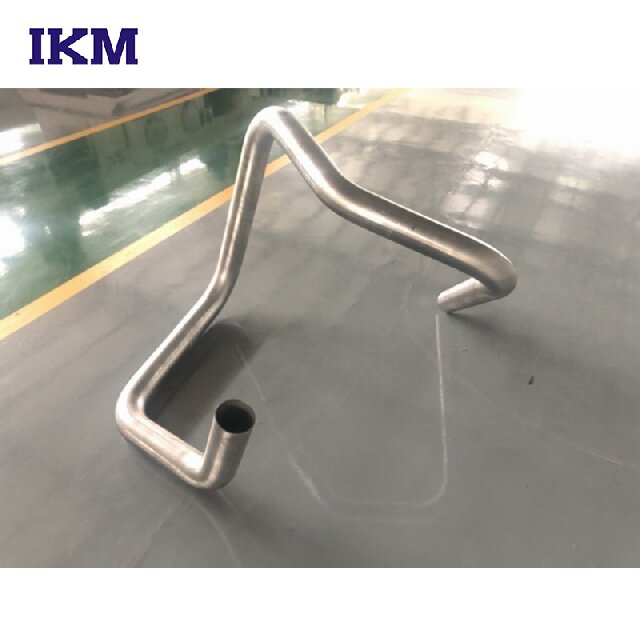


This tube fitting has no straightway between two elbows, and the bending radius less than 1D that has a certain technical difficulty. King-Mazon Company with independent scientific and technological innovation of metal conduit plastic forming technology, with Zhejiang University, Nanjing University of Aeronautics and Astronautics, Northwestern Polytechnical University, Zhejiang University, Lishui University, etc., to carry out scientific and technological research. Supported by King-Mazon Postdoctoral research Station and Zhejiang Province Key Laboratory of Aerospace Metal Tube Forming Technology and Equipment and other scientific research platforms, today has become one of the world's metal conduit bending, extrusion, expansion and other forming technology leaders. Our pipe/pipe fittings use advanced computer control system to control the action of the machine, effectively improve the quality and production efficiency of engineering pipe fittings processing, save production costs, and seek benefits for users. Welcome your consultation and communication. Thank you !
| Quantity: | |
|---|---|
Small Radius Tube Successive Bend Processing is an advanced metal conduit forming technology developed by King-Mason. It specializes in manufacturing tubes with no straight segments between bends and bending radii less than 1D (a technically challenging requirement). This processing method combines independent technological innovation with academic research collaboration. It uses computer-controlled forming equipment to produce high-precision, complex-shaped tubes for aviation, aerospace, and other high-end industries. The technology sets a benchmark for metal conduit bending, extrusion, and expansion, delivering superior quality and efficiency.
Achieves continuous bending without straight sections between elbows. It enables bending radii smaller than the tube’s outer diameter (1D), meeting complex shape requirements.
Computer control systems regulate machine actions, ensuring consistent bend angles, radii, and tube dimensions. It eliminates human error in manual processing.
Utilizes advanced metal plastic forming technology to maintain material integrity during bending. It prevents cracks, deformations, and performance degradation.
Integrates automated processing workflows to streamline production. It reduces cycle times while maintaining high precision, supporting large-scale manufacturing.
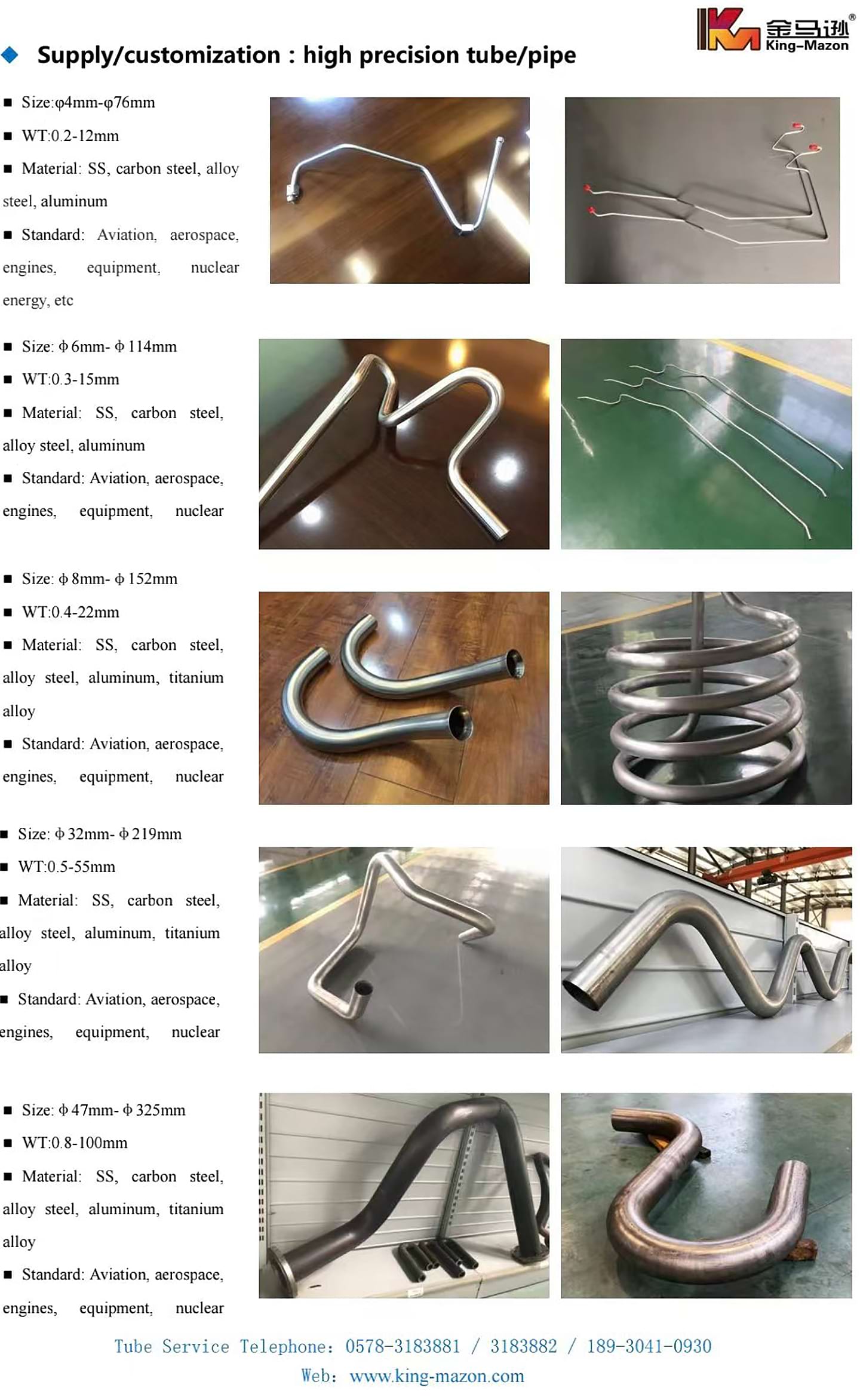
King-Mason is a global leader in metal conduit forming. The technology is backed by independent R&D and collaboration with top universities such as Zhejiang University and Nanjing University of Aeronautics and Astronautics.
Developed with support from the King-Mazon Postdoctoral Research Station and Zhejiang Province Key Laboratory of Aerospace Metal Tube Forming Technology and Equipment. It ensures cutting-edge technological capabilities.
Unique successive bend processing eliminates straight sections between elbows. It optimizes space utilization for compact aircraft and equipment layouts.
Masters the technical challenge of bending radii less than 1D. It expands design possibilities for complex-shaped tube applications.
Advanced CNC systems and servo motors drive machine actions. It enhances processing accuracy, repeatability, and production efficiency.
Improves processing quality and efficiency while reducing material waste and production costs. It delivers economic benefits to users.
Used in aircraft hydraulic tubes, fuel lines, and control cables. It fits compact engine compartments and complex system layouts.
Applied in spacecraft fuel conduits, satellite fluid systems, and launch vehicle hydraulic tubes. It meets the high reliability demands of space missions.
Suitable for medical equipment, precision instruments, and industrial robots. It provides complex-shaped tubes for compact machinery.
Integrated into aircraft engines, gas turbines, and energy generation systems. It ensures stable performance in critical applications.
Used in nuclear power plant equipment and radiation-resistant conduit systems. It adheres to strict safety and durability standards.
It achieves successive bending with radii less than 1D and no straight segments. This solves the technical challenge of complex-shaped tube manufacturing.
Aviation, aerospace, engine manufacturing, and high-precision equipment industries. These sectors require compact, high-precision complex-shaped tubes.
Computer control systems and servo motors ensure precise control of bend angles and radii. It eliminates manual errors and ensures consistent product quality.


