


Views: 0 Author: Site Editor Publish Time: 2026-09-27 Origin: Site


Setup time and changeovers represent the primary hidden cost in modern tube fabrication today. They directly impact Overall Equipment Effectiveness (OEE) and silently drain production margins. Operators frequently lose valuable hours switching between part profiles. Traditional trial-and-error calibration relies heavily on scraping tubes to manually dial in bend angles. Workers must continuously adjust hydraulic valves to maintain accuracy as machine temperatures fluctuate. In contrast, fully electric systems utilize absolute positioning to eliminate these unpredictable variables. This shift delivers instant, repeatable precision from the very first bend.
Transitioning to a full electric architecture represents a strategic operational shift rather than just a simple hardware upgrade. You will learn how digital recipe recall fundamentally eliminates repetitive test bends. We will explore how stacked tooling configurations streamline complex jobs. By the end, you will understand exactly how these modern systems reduce setup downtime and elevate your shop floor productivity.
Software-Driven Calibration: Digital recipe recall eliminates manual valve adjustments and repetitive test bending.
Thermal Stability: The absence of hydraulic fluid removes the need for warm-up periods and seasonal calibration shifts.
Tooling Consolidation: Stacked tooling configurations allow for multiple radii or profiles in a single setup.
Predictable ROI: While upfront capital expenditure is higher, the reduction in setup scrap and changeover downtime offers a measurable payback period.
Every shop floor manager knows the pain of long changeovers. They disrupt continuous production runs. You lose valuable time breaking down previous setups. Operators must perform several complex steps to prepare the next job. We can break down this standard setup process into four core components:
Physical tooling changeovers involving mandrels, dies, and clamps.
Mechanical adjustments to machine axes and physical stops.
Software programming or manual controller updates.
Test bending and subsequent scrap generation.
Scrap material quickly erodes your profit margins. Operators must manually dial in hydraulic machines to achieve precision. They bend a tube, measure the angles, and adjust hydraulic valves. Then, they repeat this cycle. This trial-and-error loop wastes expensive raw materials. It also consumes highly paid labor hours unnecessarily.
A successful equipment upgrade requires clear success criteria. We must define what a setup reduction actually looks like. An ideal goal transforms a 45-minute changeover into a 10-minute task. Your shop must achieve "first-part-good" production consistently. You eliminate the physical test-bend loop completely. This achievement sets the foundation for high-mix, low-volume profitability.
Hydraulic oil temperature fluctuates throughout a typical production shift. These thermal changes directly affect bend angles. Cold morning oil behaves differently than hot afternoon oil. This thermal drift requires constant operator intervention. They must tweak valve pressures continually to maintain tolerances.
A Full Electric CNC Bending Machine eliminates this volatile variable entirely. Electric motors do not rely on fluid dynamics. They deliver consistent torque regardless of ambient shop temperatures. You gain unmatched thermal stability across all shifts. Seasonal calibration shifts become a problem of the past.
Absolute encoders drive this instant calibration capability. Electric motors use absolute encoders to register their exact rotational position. They know their precise location the moment you apply power. Operators no longer need to perform lengthy machine homing sequences. The control system remembers the tooling position perfectly.
Axis synchronization further streamlines the setup phase. Traditional setups required manual mechanical stops for repeatable movements. Programmable axes now move to predefined positions automatically. The carriage, bend arm, mandrel, and wiper die synchronize flawlessly. They position themselves without any physical measuring tapes or wrenches.
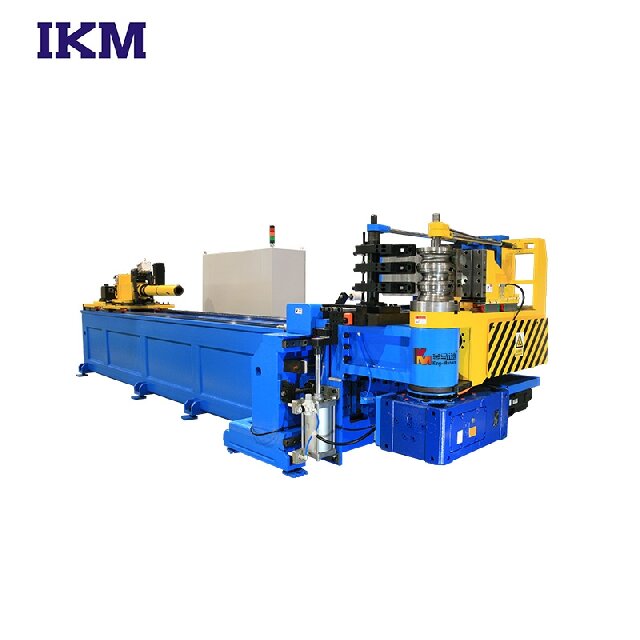
Digital recipe recall revolutionizes the modern changeover process. Shops previously relied on grease-stained manual setup sheets. Operators manually typed numbers into outdated controllers. A servo CNC tube bender centralizes all this data securely.
Loading a part file automatically adjusts critical machine parameters. The software dictates clamping pressure precisely. It sets exact mandrel anticipation timing instantly. Boost speeds adjust to match the specific tube material. You eliminate human data entry errors completely.
Offline 3D simulation saves vital floor time. Engineers can verify part feasibility before touching the machine. The software simulates the entire bending cycle on a computer. It detects potential tooling collisions proactively. You resolve clearance issues in the office instead of on the shop floor.
Springback compensation represents another major leap forward. Different metals spring back naturally after the bending force releases. Advanced CNC controls calculate these springback corrections digitally. The software applies complex material formulas instantly. This feature drastically reduces the physical test-bend loop.
We must acknowledge certain physical realities transparently. Changing a mandrel or wiper die still requires manual labor. Different tube diameters demand distinct physical tooling sets. A completely different pipe size forces operators to grab wrenches. No software can magically change a physical steel die.
However, stacked tooling configurations minimize these physical interventions significantly. Multi-stack setups allow operators to mount tools for different radii simultaneously. You can set up tools for compound bending in one go. A multi-layer mold tube bending machine manages these complex profiles effortlessly.
The machine shifts vertically between die stacks automatically. It performs these transitions during the actual bend cycle. You effectively eliminate mid-batch setup stops for complex parts. The operator loads the tube once and lets the program run. This capability drives massive efficiency gains in high-mix environments.
Feature | Single-Stack Tooling | Multi-Layer (Stacked) Tooling |
|---|---|---|
Bend Radii Limits | One radius per setup | Multiple radii in one setup |
Mid-Batch Stops | Frequent manual changes required | Eliminated via vertical shifting |
Complex Part Capability | Requires secondary operations | Completed in a single cycle |
Overall Setup Time | High (repetitive physical labor) | Low (consolidated physical labor) |
Adopting precision electric pipe bending requires careful facility planning. These machines demand clean, stable electrical power to function properly. Voltage spikes can damage sensitive electronic drives. You might need to adjust your shop floor layout. Electric benders often have smaller footprints but require different power drops.
Operator adoption remains a critical success factor. Your team must shift from mechanical troubleshooting to digital interface management. Highly skilled, "feel-based" operators might resist this change initially. They must transition to CNC-based logic and analytical thinking. Comprehensive training ensures they embrace the new digital workflow confidently.
The maintenance profile changes dramatically with electric systems. You eliminate messy oil leaks entirely. Mechanics no longer perform tedious filter changes or complex valve rebuilds. However, you must maintain clean operating environments strictly. Dust and debris can damage exposed lead screws and servo drives.
We must provide a balanced claim regarding overall machine speed. Electric machines do not speed up the actual bending cycle significantly. A bend takes roughly the same time on both platforms. The true return on investment resides elsewhere. You find the financial savings almost entirely in the setup, changeover, and scrap reduction phases.
Process Stage | Traditional Hydraulic Time | Full Electric CNC Time |
|---|---|---|
Machine Warm-Up | 15-20 Minutes | 0 Minutes |
Axis Positioning | 10-15 Minutes | Under 1 Minute |
Test Bending / Scrap | 20-30 Minutes | 1-5 Minutes |
Total Estimated Setup | 45-65 Minutes | 2-6 Minutes |
Evaluating vendor software usability should be your top priority. A clunky CNC control interface frustrates operators and slows down production. The software must integrate smoothly into your existing CAD/CAM ecosystems. Prioritize systems supporting direct STEP file imports. This integration bridges the gap between engineering and manufacturing effortlessly.
Sizing the machine correctly prevents unnecessary capital expenditure. Avoid over-buying machine capabilities you will never use. We recommend evaluating the required axis count carefully. Some machines offer up to 12 or more programmable axes. Base this decision strictly on your actual part complexity.
Take concrete steps to validate vendor claims before purchasing. Follow this simple evaluation checklist:
Send your most complex part file directly to the equipment vendor.
Request a detailed time-study outlining the exact projected cycle time.
Demand a live setup demonstration on their showroom floor.
Measure the precise time taken from power-up to first-good-part.
Compare these results directly against your current historical setup data.
A full electric machine fundamentally transforms the setup process. It elevates tube bending from a manual, mechanical art form. It becomes a highly repeatable, software-driven science. Operators become process managers rather than mechanical troubleshooters. You gain unprecedented control over your production scheduling and material yields.
For high-mix, low-volume production environments, the final verdict is clear. The drastic setup time reduction justifies the premium over hydraulic alternatives. You recover the initial cost through minimized scrap and maximized machine uptime. Embrace this digital transformation to secure a lasting competitive advantage on the shop floor.
Focus on digital recipe recall to eliminate test bends.
Leverage offline 3D simulation to resolve clearance issues early.
Utilize multi-layer tooling to reduce physical die changes.
Train your operators to master CNC interface management.
Demand live vendor demonstrations using your most difficult part files.
A: Depending on part complexity, setup times can be reduced by 50% to 80% due to automated axis positioning and the elimination of test-bending.
A: Often yes, many vendors design electric machines to accept standard drop-in tooling, but buyers must verify exact die mounting specs during evaluation.
A: No. Operators must still physically swap the mandrel, wiper die, and bend dies when changing tube diameters. However, the machine automatically handles all pressure and positioning settings.
A: Yes, modern servo technology has advanced to handle high-torque applications, though hybrid machines (electric axes + hydraulic clamping) remain a valid option for extreme heavy-duty piping.


