


Views: 0 Author: Site Editor Publish Time: 2026-10-12 Origin: Site


Selecting the right metal shaping equipment goes far beyond matching a basic tube diameter. You must carefully align material behavior, production volume, and precise end-shape geometries. Choosing the wrong machine architecture often leads to severe material stress. You might experience frustrating cracking, severe wrinkling, and scrapped parts. You will also face excessive tooling changeover times and cycle-time bottlenecks. These operational failures destroy production efficiency and inflate manufacturing lead times.
This guide provides a strict engineering framework for evaluating and shortlisting the exact equipment you need. We break down how to assess standard fabrications alongside highly custom geometries. You will learn to map distinct machine capabilities directly to your factory's daily operations. Whether you seek a standard tube end forming machine or a fully automated cell, this roadmap ensures maximum production reliability.
Complex shapes (e.g., sequential expanding and flanging) typically require a Multi-Station End Forming Machine to prevent workflow bottlenecks.
Material yield strength and wall thickness dictate necessary hydraulic tonnage or servo-electric torque, independent of the desired shape.
A CNC End Forming Machine maximizes ROI only in high-mix, low-volume scenarios or when asymmetric/interpolated shapes are required.
Tooling compatibility and changeover ergonomics are critical, often overlooked cost drivers in multi-product manufacturing lines.
Start your evaluation by working backward from your final blueprint geometry. Different shapes require fundamentally different mechanical force applications. You must understand the difference between linear ram forming and rotary forming. Each method manipulates metal differently. Understanding these mechanical realities prevents poor equipment selection.
These operations rely heavily on standard linear ram-forming requirements. A hydraulic or servo-driven ram pushes a die directly into or over the tube. This action forces the metal to expand outward or compress inward. It is a rapid, straightforward process.
You must choose between segmented tooling and solid die approaches. Segmented tooling uses expanding fingers. It works incredibly fast. However, it often leaves small witness marks on the interior surface. Solid die approaches provide a much smoother surface finish. They hold tighter tolerances. Yet, they require more force and slightly longer extraction times.
Creating beads, grooves, or flanges typically introduces rotary forming requirements. Rotary forming spins the tube or the tooling to manipulate the metal gradually. This process excels at maintaining uniform wall thickness. Ram forming a deep groove might crush the tube. Rotary forming handles it effortlessly.
You must assess single-hit versus multiple-hit requirements for sharp radii. A gradual radius might only need a single pass. A sharp, ninety-degree flange often requires multiple forming hits. Pushing the metal too far in one hit causes tearing. Rotary systems distribute the stress evenly across the circumference.
Modern product designs often demand highly customized end shapes. You might need to transition from single-process logic to multi-step forming. You cannot always achieve complex geometries in one stroke. Expanding a tube and then rolling a bead requires sequential operations.
You must identify when a combined rotary and ram approach is necessary. Some custom asymmetric profiles demand both linear force and radial manipulation. A versatile Tube End Forming Machine can handle these hybrid requirements. It seamlessly moves the part between distinct forming stations.
Do not simply compare baseline capabilities. You should evaluate solution categories based on scalability and cycle-time efficiency. Evaluate how the machine fits into your broader factory workflow. Equipment must align with your actual production volume.
These units represent the workhorses of standard manufacturing. Their best use case is high-volume, single-shape runs. For example, standard HVAC copper reductions rely heavily on single-station machines. They perform one job flawlessly.
However, they have serious limitations in flexibility. If your product lines pivot, these machines carry the highest risk of obsolescence. You cannot easily reconfigure them for entirely different forming processes. They lack the versatility needed for diverse job shops.
When operations require sequential steps, you need advanced integration. The mechanism involves moving the tube linearly or via an indexing head across multiple tooling stations. You might expand, bead, and then flange the tube in one continuous cycle. This happens seamlessly.
The ROI justification is compelling. A Multi-Station End Forming Machine eliminates work-in-progress (WIP) transfer times between dedicated single-station machines. It dramatically reduces operator headcount. Your factory flow improves instantly.
Programmable automation changes the manufacturing landscape. Programmable axes become mandatory in high-mix production environments. If you require rapid, repeatable changeovers several times a day, you need numerical control. Operators load a program, and the machine adjusts itself.
However, you should apply a skeptical lens. Avoid over-investing in a CNC End Forming Machine if your facility runs static, high-volume production. Mechanical indexing easily suffices for unchanging parts. Buy CNC capabilities only when flexibility actively drives your profitability.
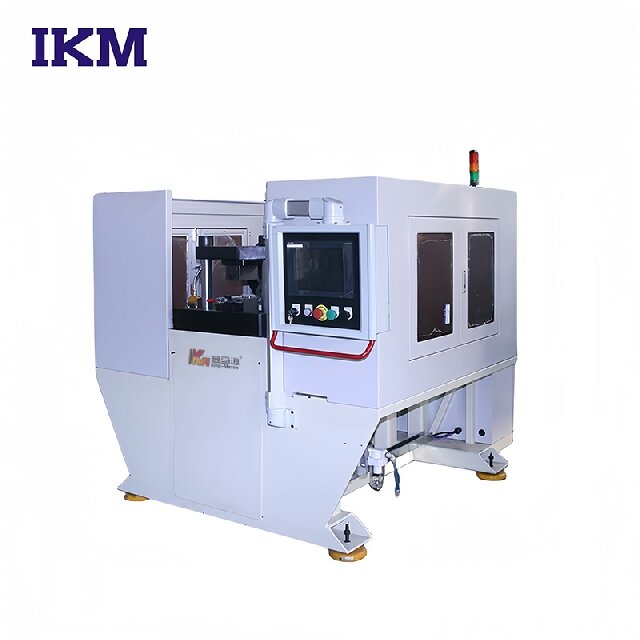
You need a strict evaluation framework. Establish the hard metrics buyers must demand from manufacturers before requesting a formal quote. Relying on glossy brochures leads to poor integration. Demand raw data and engineering proof.
Material properties dictate machine sizing. You must calculate the required clamping force to prevent tube slippage. High-tonnage end forming creates immense axial pressure. If your clamp slips, your part fails. Clamp length and jaw design matter greatly.
You must carefully assess the impact of work-hardening materials. Alloys like 304 Stainless Steel and Titanium fight back as they bend. They become harder during the forming process. This reaction drastically increases the machine power requirements. Always size your equipment for your hardest material.
Throughput determines your daily profitability. You must evaluate the specific loading and unloading mechanisms. Hand-loading a machine works for low volumes. High-volume runs require hopper feeds or robotic arm integration. Ensure the machine controller speaks the same protocol as your robotics.
Always review cycle-time guarantees provided by the manufacturer. Compare these guarantees against real-world production speeds. Lab conditions rarely match factory floors. Ask the vendor for case studies matching your exact material and geometry.
Tooling design impacts your daily uptime. Beware the hidden cost of proprietary tooling. If you rely solely on the original manufacturer for every die and punch, your lead times will suffer. Open-source or standardized tooling profiles offer much better flexibility.
Assess drop-in tooling designs and tool-less changeover features. Quick-change tooling reduces a two-hour setup to fifteen minutes. This capability acts as a massive competitive advantage. It empowers operators to switch batches rapidly.
Material Property and Process Capability Matrix
Material Type | Yield Strength (Typical) | Recommended Forming Process | Primary Challenge |
|---|---|---|---|
Aluminum (6061-T6) | 276 MPa | Rotary or Linear Ram | Galling on tooling surfaces |
Copper (C12200) | 100 MPa | Linear Ram (High Speed) | Excessive material thinning |
Stainless Steel (304) | 215 MPa | Multi-Station Segmented | Severe work-hardening |
Titanium (Grade 2) | 345 MPa | Heated Rotary Forming | High springback, cracking risk |
Practical experience reveals many post-purchase challenges. We want to highlight the common pitfalls to demonstrate real implementation expertise. Anticipating these risks ensures a smooth installation and faster time-to-market.
Metals naturally try to return to their original shape after bending. Machine rigidity plays a crucial role here. Frame deflection directly impacts your ability to hold tight tolerances. A weak machine frame flexes under load. This flex ruins your final dimensions.
Look for advanced software compensation features. Raw material batches vary in hardness. Smart controllers adjust the stroke slightly to account for these variations. They automatically compensate for springback. This technology drastically reduces your scrap rate.
You cannot ignore operator safety. Ensure the equipment features essential safety components. Light curtains and two-hand tie-downs keep hands out of the danger zone. Demand full CE or OSHA compliance documentation from the vendor.
Consider the impact of ergonomic loading heights. Bending over constantly causes operator fatigue. Fatigue leads to mistakes and drops your daily throughput. A machine designed for human comfort performs better over an eight-hour shift.
You need actionable next steps to finalize your purchase. Define strict criteria for final vendor selection. Do not skip these verification phases. They separate reliable machinery partners from mere equipment brokers.
Demand a Factory Acceptance Test (FAT): Require the vendor to run your specific raw materials. Do not accept tests run on generic demo stock. Your tubing has unique metallurgical properties. The FAT proves the machine works on your actual product.
Evaluate Application Engineering Support: Assess the vendor's technical depth. Will they help design the initial tooling for your custom shape? A strong partner engineers the process, not just the machine. They should provide detailed die blueprints and force calculations.
Assess Software and Calibration Capabilities: Review the control system architecture. Evaluate the onboard diagnostics, routine calibration requirements, and operator learning curves. Complex machinery requires intuitive interfaces to prevent extended downtime during shift changes.
The optimal end forming equipment strictly aligns mechanical architecture with the specific geometric complexities of your final product. Properly matched machines minimize costly secondary operations. They eliminate scrap and stabilize your production schedules. Standard machines work perfectly for dedicated runs, while advanced platforms handle complex, multi-step operations.
You must base your investment on hard data. Evaluate material strength, assess cycle-time guarantees, and demand real-world testing. We encourage buyers to compile their CAD drawings, material specifications, and target cycle times today. Engage an application engineer immediately for a customized capability study. Do not guess; let the engineering data drive your final decision.
A: Yes. However, tooling such as dies and punches must be swapped to match the material. Force parameters require adjustment. Importantly, the machine's baseline tonnage must be rated for your strongest material, which is typically the steel alloy.
A: It becomes necessary when a single end shape requires two or more sequential operations. For example, performing a heavy reduction followed by a severe flare requires multiple steps. Attempting this in a single hit often compromises wall thickness or fractures the material.
A: A mechanical tooling swap often takes just 10 to 15 minutes if you utilize quick-change setups. Program loading takes only seconds. The CNC architecture drastically reduces software configuration times, making it ideal for rapid batch switching.


