


Views: 0 Author: Site Editor Publish Time: 2026-05-14 Origin: Site


Tube processing plays a vital role in modern manufacturing, driving industries like HVAC, automotive, and construction. As precision and efficiency become more crucial, specialized systems and machines are now essential for optimizing production processes. In this article, we will explore the importance of tube processing and how partnering with the right tube processing machines supplier can significantly enhance business operations.
Tube processing machines are a set of specialized equipment designed to shape, cut, bend, and form tubes and pipes for various industrial applications. These machines include systems like cutting machines, tube benders, end formers, and laser cutters. The key role of these machines is to provide high precision in processing tubes made from materials such as stainless steel, aluminum, and copper. By using such systems, manufacturers can achieve the exact dimensions and shapes needed for their end products.
Efficiency is a crucial factor in tube processing as it directly impacts production speed and material costs. Advanced tube processing machines streamline operations by automating many tasks that would otherwise be labor-intensive. By integrating different stages of processing—such as cutting, bending, and forming—into a single system, manufacturers can reduce downtime, improve throughput, and minimize material waste. The result is a more cost-effective and reliable production process.
The following table combines the applications, technical specifications, and selection recommendations for tube processing machines across various industries. This provides businesses with comprehensive decision-making support to help choose the appropriate equipment.
| Industry | Application Areas | Requirements & Technical Specifications | Recommended Machine Types | Considerations | Production Efficiency & Operational Tips |
|---|---|---|---|---|---|
| Automotive | Exhaust systems, fuel lines, structural components | Precision bending, cutting, and forming, high-strength material requirements | Tube benders, end formers, laser cutting machines | Must meet strict industry quality standards for safety and durability | Machines must enable high-volume production, quick tool changes, and ensure precise part accuracy |
| HVAC | Heat exchangers, coils, heating and cooling system components | High precision and heat resistance, adaptability to various materials | Tube benders, end formers, heat treatment systems | Ability to handle specialized materials such as copper and aluminum; flexible system design | Seamless integration of production lines and equipment, ensuring continuous high-efficiency production |
| Construction | Structural components, pipes, and conduits for infrastructure | High-volume production, precise dimensional control, and good surface quality | Tube cutting machines, end formers, CNC tube processing machines | Requires efficient production lines to minimize material waste and accommodate various pipe specifications | Machines should handle large materials and reduce operational complexity |
Tip:When selecting tube processing machines, ensure the equipment meets both the production volume and precision requirements, while being adaptable to future production needs.
Automatic tube cutting systems, like the RTA 35 and RTA 75, are designed to cut tubes chiplessly and with minimal burrs. These machines use advanced technologies to ensure clean cuts that enhance product quality and reduce post-processing. Automatic tube cutters are especially valuable in high-volume production environments where precision and speed are critical. These systems handle a range of tube diameters, from 2 to 76 mm, with wall thicknesses between 0.4 and 3 mm.
Manual tube cutting machines, such as the "Trennomat," offer versatility for cutting steel, copper, and non-ferrous tubes. These machines also provide chipless cutting with low burrs, which is especially useful in industries requiring high-quality finished tubes. While they are more labor-intensive than automatic systems, manual tube cutters allow for flexibility in smaller production runs or custom projects.
Machines like the Rotak are designed to cut curved tubes without creating chips. These machines not only provide precise cuts but also offer the ability to chamfer tube ends or adjust the inner diameter during the cutting process. This feature makes them ideal for industries that deal with complex tube geometries and require high levels of customization.
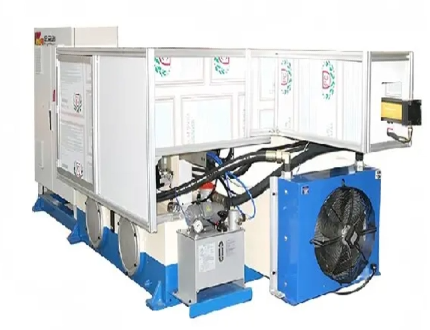
Tube bending is a critical part of the manufacturing process in industries like automotive and HVAC. Various methods are used to bend tubes, including rotary draw bending, mandrel bending, and CNC bending. Each method is chosen based on factors such as tube material, diameter, and bend radius. Rotary draw bending uses a die to form the tube around a stationary mandrel, ensuring consistent and precise bends. For high-precision needs, CNC bending systems offer programmable control, making them ideal for complex or high-volume production runs.
End forming machines shape the ends of tubes to prepare them for connections or fittings. Techniques like reduction, expansion, beading, and flaring are used to create tube ends that fit snugly into other components. These machines are commonly used in industries like automotive manufacturing, where tube ends must be shaped for secure and leak-proof connections.
Recent advancements in tube bending technology, such as CNC vector tube benders and mandrel bending machines, have enhanced the precision and efficiency of the bending process. These machines are capable of producing tight-radius bends in materials like stainless steel and aluminum, which are essential for industries such as aerospace, automotive, and HVAC. By automating the bending process, businesses can achieve consistent results, reduce labor costs, and improve production speed.
The integration of different tube processing stages—such as cutting, bending, and forming—into fully automated lines has revolutionized tube manufacturing. These integrated systems maximize production efficiency by reducing manual intervention and enabling continuous, high-speed processing. Automation also ensures consistency in product quality, reducing the likelihood of errors and defects.
Many tube processing systems are designed to process tubes from coils, which offers significant cost savings. The ability to handle coils directly means there is no need for separate cutting of raw material, thus eliminating waste and improving material utilization. Systems that process materials from coils can be integrated with automatic feeding and storage systems, creating a continuous, efficient production flow.
Automated tube handling and storage systems reduce the need for manual labor and streamline production. These systems include features like automatic belt conveyors and storage units that optimize space and improve throughput. By integrating these systems into a tube processing line, manufacturers can reduce downtime, improve safety, and ensure that materials are always available when needed.
Laser cutting machines have become a key technology in tube processing due to their ability to create precise cuts in complex geometries. Laser cutting provides high-speed processing with minimal material waste, making it ideal for industries that require intricate designs, such as aerospace and automotive manufacturing. These machines are capable of cutting a variety of tube materials, including metals and alloys, to exact specifications.
Tube hydroforming and swaging are advanced techniques used to alter the cross-section of tubes, creating complex shapes with high precision. Hydroforming uses high-pressure fluids to expand the tube against a mold, while swaging involves compressing the tube with dies to achieve the desired shape. These methods are ideal for industries that require high-strength, custom-shaped tubes for applications such as automotive frames, hydraulic lines, and aerospace components.
Induction bending machines use electromagnetic coils to heat the tube and then apply pressure to form the bend. This process is energy-efficient and produces minimal material distortion, making it suitable for applications that require high precision and large radii bends. Induction bending is commonly used in industries like oil and gas, where large structural parts and thick-walled tubes are required.
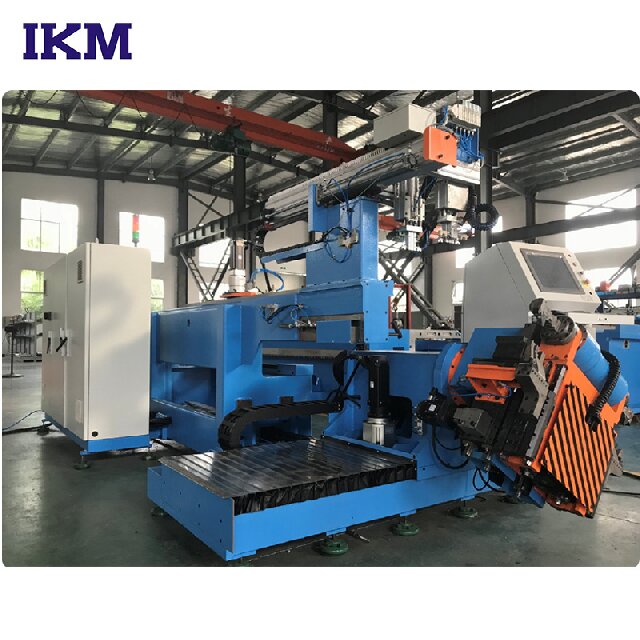
In tube processing, maintaining precise dimensions is crucial for ensuring the functionality and reliability of the end product. Automated measurement systems play a key role in this process by continuously monitoring the tube's dimensions and making adjustments as needed. This ensures that each tube meets the required specifications and quality standards, especially in critical applications like fluid transport and structural components.
CNC systems offer significant advantages in tube processing by allowing for automated, high-precision operations. These systems are particularly useful in industries that require complex bends, cuts, or shapes. CNC tube processing machines can be programmed to perform multiple operations in sequence, improving repeatability and reducing human error.
To ensure product quality and safety, tube processing machines must comply with industry standards such as ISO and CE certifications. These certifications verify that the machines meet rigorous performance, safety, and environmental standards, providing confidence to businesses and customers alike. Working with a reliable tube processing machines supplier ensures that the equipment is both compliant and optimized for high-quality production.
HVAC systems require tubes for a wide range of applications, including heat exchangers, coils, and piping. Specialized tube processing machines are designed to meet the specific needs of the HVAC industry, ensuring high precision and quality. These systems can handle tubes made from different materials, such as copper and aluminum, and can process them into complex shapes or configurations to fit various HVAC applications.
The following table outlines the requirements for tube processing systems in the automotive industry, detailing applications, technical specifications, efficiency, effectiveness, and key considerations. This provides clear guidance for businesses in selecting the appropriate tube processing equipment.
| Application Area | Technical Requirements & Specifications | Recommended Machine Types | Efficiency & Effectiveness | Considerations |
|---|---|---|---|---|
| Exhaust Systems | High precision bending, ability to handle high-temperature materials | Tube benders, end formers | Efficient bending with minimal deformation | Machines must handle high-temperature environments and meet automotive safety standards |
| Fuel Lines | Precise dimensions, ensuring secure and leak-free connections | Laser cutting machines, tube cutters | High-precision cutting, minimizing tube waste | Requires leak-proof connections and stability under pressure |
| Structural Components | High strength, ensuring durability and safety | End formers, CNC tube benders | Efficient processing of high-strength materials, reducing waste and labor time | Strict dimensional control is essential for safety and durability |
Tip:When selecting tube processing machines, ensure they are capable of handling specific high-strength materials and meet the automotive industry's high precision requirements, ensuring long-term reliability and safety of the tubes.
Choosing the right tube processing machines supplier is crucial for businesses aiming to optimize their production processes. With investments in high-quality machines that integrate cutting, bending, and forming capabilities, manufacturers can achieve enhanced efficiency, flexibility, and product quality. Companies like Zhejiang King-Mazon Intelligent Manufacturing Corp., Ltd. offer innovative solutions, providing exceptional value with their advanced tube processing systems. As demand for precision and customization continues to rise, their products are pivotal in meeting modern manufacturing challenges.
A: Tube processing machines are specialized equipment used to cut, bend, shape, and form tubes for various industries. A tube processing machines supplier can provide systems like cutting machines, tube benders, and laser cutters to ensure precise and efficient tube production.
A: Tube processing machines streamline manufacturing by automating processes like cutting, bending, and forming. A tube processing machines supplier can integrate these stages into automated systems, reducing downtime, improving throughput, and minimizing material waste.
A: Precision ensures that the tubes meet exact specifications required for industries like automotive and HVAC. A reliable tube processing machines supplier provides equipment that guarantees dimensional accuracy for high-quality results.
A: A tube processing machines supplier can offer tailored solutions, such as CNC tube bending machines, to handle custom tube shapes, sizes, and materials, ensuring flexibility for unique production needs.
A: A tube processing machines supplier provides advanced equipment that increases productivity, reduces labor costs, and ensures consistent, high-quality production. Their expertise helps businesses optimize operations for various applications.
A: When choosing a tube processing machines supplier, consider factors such as machine reliability, support services, customization options, and the supplier's experience in your industry. Quality and efficiency should also be key priorities.


